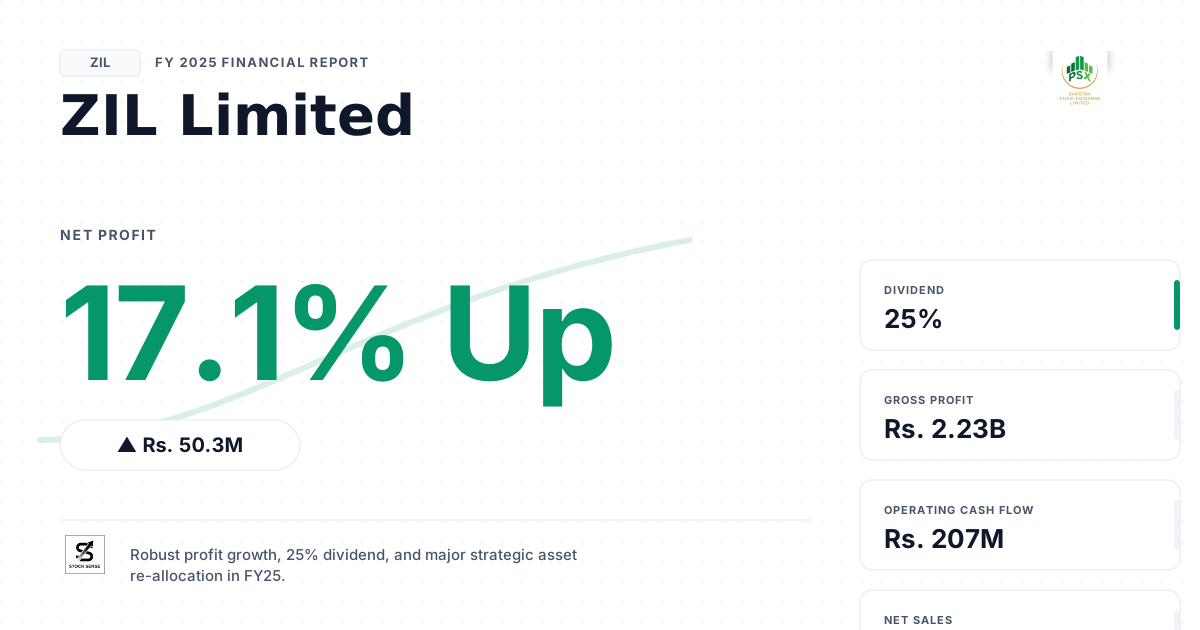
ZIL Limited has announced its audited financial results for the year ended December 31, 2025, showcasing a robust 17.1% increase in net profit and recommending a final cash dividend of Rs. 2.50 per share (25%). While the company achieved a healthy 7.5% revenue growth, a significant improvement in gross margins and a striking strategic re-allocation of assets on the balance sheet highlight a pivotal year for ZIL.
Financial Performance Highlights
The company reported a strong 7.5% growth in net sales, reaching Rs. 6.85 billion in 2025, up from Rs. 6.36 billion in the previous year. This top-line expansion was accompanied by a notable improvement in profitability at the gross level. Gross profit surged by an impressive 26.4% to Rs. 2.23 billion, pushing the gross profit margin from 27.7% in 2024 to 32.5% in 2025. This indicates strong pricing power or effective cost management at the production stage.
However, operating profit saw a slight dip of 3.4% to Rs. 204 million from Rs. 211 million, despite the higher gross profit. This was primarily due to a substantial increase in selling and distribution expenses, which rose by 30.6% to Rs. 1.52 billion, and administrative expenses, which increased by 13.4%. Additionally, the company recorded a new allowance for expected credit losses amounting to Rs. 70 million, which further impacted operating profitability.
On a positive note, finance costs decreased significantly by 25.8% to Rs. 88 million, contributing to a higher profit before taxation of Rs. 115.6 million (up 25.4% from Rs. 92.2 million). Ultimately, ZIL Limited posted a net profit of Rs. 50.3 million, a 17.1% increase over Rs. 42.9 million in 2024, translating to an improved Earnings Per Share (EPS) of Rs. 8.21 compared to Rs. 7.01 in the prior year.
The balance sheet reflects significant strategic changes. Total assets grew by 7.0% to Rs. 3.31 billion, largely driven by the introduction of 'Investment Property' valued at Rs. 1.30 billion, which was not present in 2024. This new asset class emerged as Property, Plant & Equipment (PPE) saw a substantial decrease of 55.7% from Rs. 1.47 billion to Rs. 649 million, indicating a significant re-allocation or reclassification of assets. Current assets also saw a healthy increase of 16.6%.
Net cash flows from operating activities more than doubled, surging by 108.6% to Rs. 207 million (2024: Rs. 99 million), indicating strong operational cash generation. However, net cash flows from investing activities turned negative at Rs. (159) million (2024: Rs. 49 million positive) due to new short-term investments and capital expenditure, alongside the major asset re-allocation.
Key Drivers & Strategic Shifts
The primary drivers for ZIL's performance in 2025 and its strategic direction appear to be:
- Robust Revenue Growth: Consistent sales performance across its product lines, driving the 7.5% top-line increase.
- Improved Gross Margins: Better cost control or pricing strategies leading to a significant 26.4% boost in gross profitability.
- Significant Boost in Other Operating Income: A notable 265% rise in other operating income, from Rs. 19 million to Rs. 70 million, contributed substantially to overall profitability.
- Strategic Asset Re-allocation: The substantial investment in 'Investment Property' (Rs. 1.30 billion), coupled with a significant reduction in Property, Plant & Equipment, suggests a strategic move to diversify assets or generate new income streams, potentially through re-purposing existing assets.
Management Actions & Investor Signals
The Board's recommendation of a 25% cash dividend (Rs. 2.50 per share) signals confidence in the company's financial health and commitment to shareholder returns. This is particularly noteworthy given the significant capital re-allocation towards 'Investment Property' during the year. The absence of bonus or right shares indicates a focus on direct cash distribution.
The substantial shift in the asset base, particularly the Rs. 1.30 billion 'Investment Property' and the corresponding decrease in PPE, is the most striking strategic signal. This move could imply a long-term strategy to enhance the asset base, generate rental income, or potentially re-purpose assets for new ventures. Investors will be keen to understand the nature and expected returns from this new asset class.
Investor Takeaway
For investors, ZIL Limited's 2025 results present a mixed but generally positive picture. The strong growth in net profit and EPS, coupled with a generous cash dividend, are clear positives. The significant improvement in gross margins suggests underlying operational efficiency, further strengthened by robust net operating cash flow.
However, investors should closely monitor the following:
- Investment Property: The details surrounding the Rs. 1.30 billion 'Investment Property' are crucial. What is its nature, and how will it contribute to future earnings? Is it a diversification play or related to core operations?
- Operating Expenses: The surge in selling, distribution, and administrative expenses, along with the new allowance for expected credit losses, warrants attention. Management's strategy to control these costs while driving growth will be key.
- Asset Re-allocation & Cash Flow: While net operating cash flow is strong, the shift to negative investing cash flow is driven by new investments and the significant re-allocation from PPE to Investment Property. The returns on these strategic shifts will be vital for future growth and value creation.
Overall, ZIL Limited appears to be in a phase of strategic re-allocation and growth, balancing strong operational performance with significant new investments. The dividend payout reflects management's confidence, but the success and contribution of the 'Investment Property' will be a key determinant of long-term value creation.