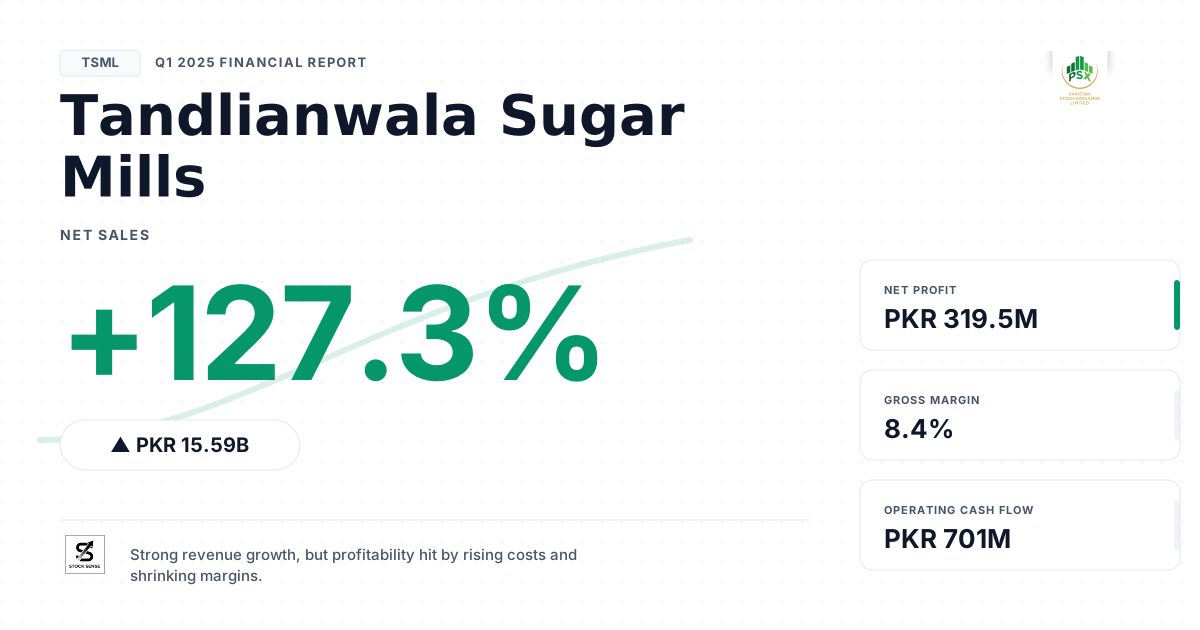
Tandlianwala Sugar Mills Limited (TSML) has reported a mixed bag of financial results for the first quarter ended December 31, 2025. While the company achieved an impressive 127.3% surge in net sales, this top-line growth did not translate into higher net profits, which actually declined by 17.8% year-on-year. This dichotomy signals significant challenges in cost management and margin preservation, presenting a complex picture for investors.
Financial Performance Highlights
TSML's net sales skyrocketed to PKR 15.59 billion in Q1 2025, a substantial increase from PKR 6.86 billion in the same period last year. This remarkable revenue expansion, however, was overshadowed by a sharp contraction in gross profit margins. Despite the revenue surge, gross profit contracted by 2.7% to PKR 1.31 billion (from PKR 1.35 billion last year), indicating that the cost of sales grew at a much faster pace than revenue. Consequently, the gross margin plummeted from nearly 19.7% to just over 8.4%.
Operating profit also saw a modest decline of 5.9% to PKR 997 million from PKR 1.06 billion. A silver lining appeared in finance costs, which decreased by approximately 18.7% to PKR 484 million, providing some relief. However, a significantly higher tax expense of PKR 193.5 million (up from PKR 74.8 million, a 158.8% increase) further squeezed the bottom line. Consequently, profit after taxation fell to PKR 319.5 million from PKR 388.7 million, and earnings per share (EPS) dropped from PKR 3.30 to PKR 2.71.
On the cash flow front, TSML showed a strong turnaround. Net cash generated from operating activities improved dramatically, swinging from a negative PKR 264 million in Q1 2024 to a positive PKR 701 million in Q1 2025. This suggests better working capital management or higher cash conversion from sales. The balance sheet shows a slight increase in total equity and a reduction in short-term borrowings, which is a positive sign for debt management.
Key Drivers & Margin Pressures
The extraordinary growth in net sales strongly suggests either significantly higher sales volumes or a substantial increase in sugar prices, or a combination of both. However, the dramatic erosion of gross margins points to escalating input costs, particularly sugarcane, which likely outpaced the increase in selling prices. This indicates a challenging operating environment where the company is absorbing higher production costs, impacting overall profitability.
The reduction in finance costs likely stems from either lower interest rates or a reduction in overall debt, as evidenced by the PKR 356.16 million decrease in short-term borrowings. The substantial increase in taxation, however, acted as a major drag on net profitability, with the effective tax rate rising significantly from 16.1% to 37.7% for the period.
Management Actions & Strategic Signals
The company did not recommend any cash dividend, bonus, or right issue for the period, a decision that might disappoint income-focused investors and likely reflects the lower net profitability despite robust sales. Capital expenditure for the quarter stood at PKR 99.5 million, suggesting ongoing investments in property, plant, and equipment. The significant increase in trade and other payables on the balance sheet (up PKR 1.75 billion from September 30, 2025) could indicate extended credit terms from suppliers, helping to manage working capital.
Investor Takeaway
For investors, TSML's Q1 2025 results present a complex picture. The massive revenue growth is a positive signal for market demand and the company's operational scale. However, the severe compression of gross margins and the subsequent decline in net profit and EPS are significant concerns that demand close attention. The improved operating cash flow is a welcome development, suggesting better liquidity and operational efficiency.
Rational investors should closely monitor the trajectory of gross margins in upcoming quarters. Key factors to watch include the stability of raw material prices (sugarcane), the prevailing selling prices for sugar, and the company's ability to effectively pass on cost increases. The higher effective tax rate is also a point of vigilance. While the absence of a dividend might deter some, the strong top-line growth, if coupled with a sustained margin recovery, could still offer a compelling long-term story.