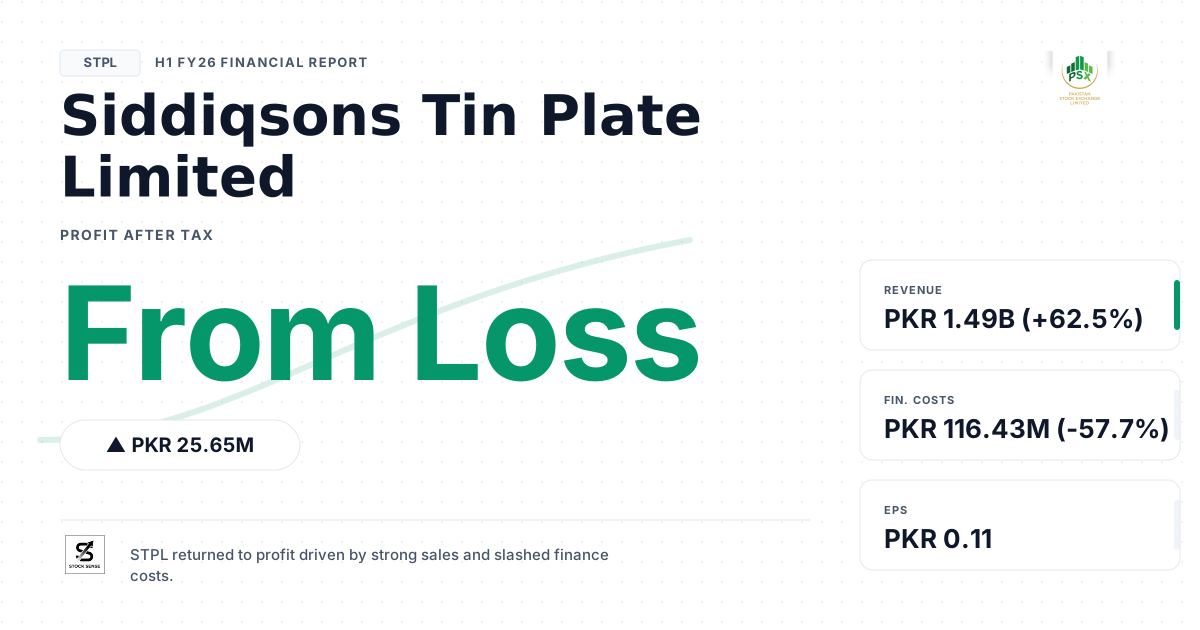
Siddiqsons Tin Plate Limited (STPL) has reported a significant turnaround, moving from a loss-making position to profitability in the first half of fiscal year 2026 (H1 FY26) ended December 31, 2025. This positive shift was primarily fueled by robust revenue growth and a substantial reduction in finance costs, offering a glimmer of hope for investors after a challenging period, though some underlying pressures warrant close attention.
Financial Performance Highlights
The company's top-line performance was impressive, with revenue from contracts growing by a remarkable 62.5% to PKR 1.49 billion for H1 FY26, compared to PKR 919 million in the same period last year. The second quarter (Q2 FY26) alone saw revenue increase by 22.8% year-on-year to PKR 854 million, indicating sustained demand for STPL's products.
Crucially, STPL swung to a profit after tax of PKR 25.65 million for H1 FY26, a stark contrast to the loss of PKR 154.23 million reported in H1 FY25. This translates to a positive Earnings Per Share (EPS) of PKR 0.11, compared to a loss per share of PKR 0.67 previously. The Q2 FY26 also contributed positively, recording a profit after tax of PKR 16.75 million against a loss of PKR 22.29 million in Q2 FY25.
Despite the strong revenue, gross profit margins faced pressure. While gross profit grew by 47.6% for the half-year, the gross profit margin slightly contracted from 15.5% in H1 FY25 to 14.1% in H1 FY26. More notably, in Q2 FY26, gross profit actually decreased by 27.3% year-on-year to PKR 119.4 million, despite higher sales, indicating significant margin compression in the latest quarter (from 23.6% in Q2 FY25 to 14.0% in Q2 FY26). This unexpected development warrants close investor monitoring.
A key driver for the return to profitability was the dramatic reduction in finance costs, which plummeted by 57.7% to PKR 116.43 million for H1 FY26 from PKR 275.10 million in H1 FY25. This substantial saving on borrowing costs significantly boosted the bottom line, highlighting effective debt management or a favorable interest rate environment.
On the balance sheet, total assets increased by approximately 4.4% to PKR 4.65 billion since June 30, 2025. Current assets saw a notable jump, largely due to trade debts nearly doubling from PKR 194.01 million to PKR 391.66 million, suggesting higher sales on credit. However, current liabilities also rose, with short-term borrowings increasing by 14.4% from PKR 968.95 million to PKR 1.11 billion, indicating a notable increase in short-term financing. Cash and cash equivalents at the end of the period remained in a significant negative position at PKR (590) million, highlighting ongoing working capital challenges.
Key Operational Insights
While the financial statements do not segment revenue by product or business line, the robust top-line growth suggests strong demand for STPL's tin plate products in the market. The significant reduction in finance costs points to either a more favorable interest rate environment, successful renegotiation of borrowing terms, or a strategic reduction in overall debt exposure, particularly long-term finances which saw repayments.
Strategic Outlook and Investor Considerations
The company's board has not recommended any cash dividend, bonus shares, or right shares for the period. This indicates that STPL is likely prioritizing cash retention for operational needs, working capital management, or further debt reduction, rather than immediate shareholder payouts. The increase in trade debts and short-term borrowings suggests that the company is actively managing its working capital to support the higher sales volume.
Investor Takeaway
STPL's return to profitability is a significant positive development for investors, signaling a potential turnaround story. The strong revenue growth demonstrates market demand, and the substantial reduction in finance costs has been a critical factor in boosting the bottom line. However, the unexpected compression in gross profit margins during Q2 FY26, despite higher sales, is a point of concern that warrants close monitoring. Investors should also keep an eye on the company's working capital management, particularly the increasing trade debts and short-term borrowings, and the persistently negative cash and cash equivalents.
For rational investors, the immediate catalysts to watch will be the sustainability of revenue growth, any signs of gross margin recovery in subsequent quarters, and the company's strategy for managing its debt and working capital. The absence of a dividend suggests a focus on strengthening the company's financial position, which could be a long-term positive if executed effectively.