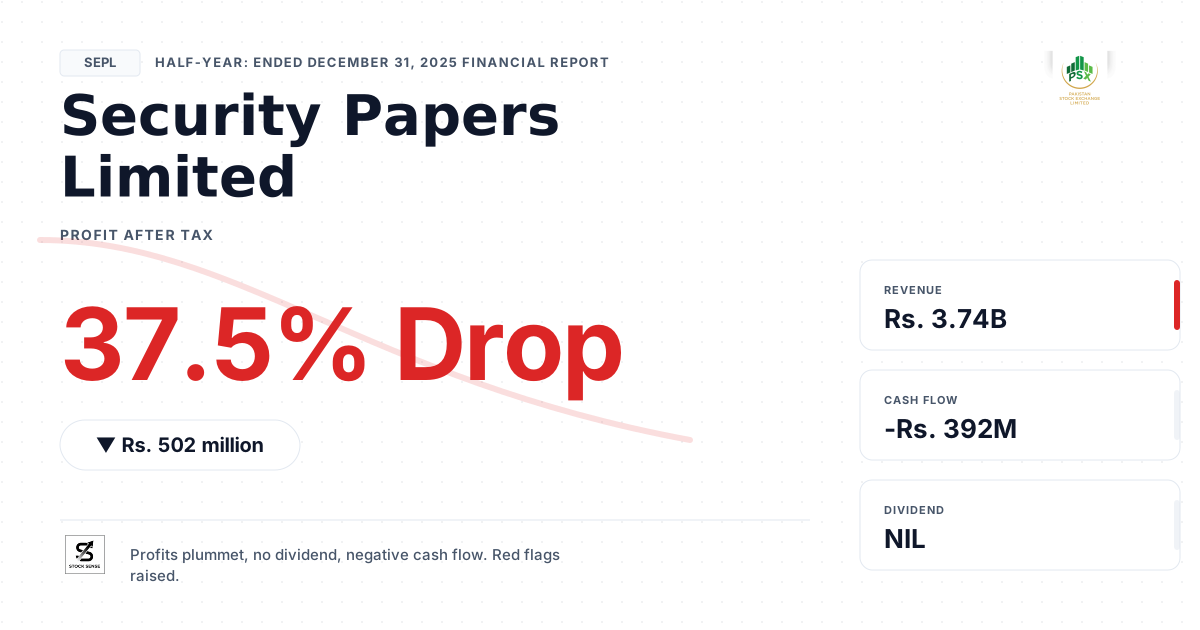
Security Papers Limited (SEPL) has unveiled a challenging performance for the first half of the fiscal year ended December 31, 2025. The company reported a substantial decline in profitability and, notably, its board opted against recommending any cash or bonus dividend. These results highlight significant pressure on both top-line revenue and gross profit margins, prompting investor scrutiny over SEPL's operational efficiency and near-term prospects.
Financial Performance Under Pressure
SEPL's revenue from contracts with customers for the six months ended December 31, 2025, decreased by approximately 10% to Rs. 3.74 billion, down from Rs. 4.17 billion in the same period last year. This top-line contraction, coupled with rising costs, led to a significant 28% drop in gross profit, falling to Rs. 844 million from Rs. 1.17 billion. Consequently, profit after taxation plummeted by 37.5% to Rs. 502 million, resulting in earnings per share (EPS) of Rs. 8.47, a sharp decline from Rs. 13.54 previously.
The gross profit margin contracted noticeably from 28% to 22.5% for the half-year. A closer look at the second quarter (October-December 2025) reveals an even more pronounced squeeze, with the gross margin falling to just under 19.5% compared to 28% in the prior year's corresponding quarter. This indicates severe cost pressures or a challenging pricing environment. Furthermore, 'Other Income' also saw a substantial decrease of 34.6%, further impacting the bottom line.
A major concern from the cash flow statement is the significant shift to negative cash flow from operating activities, recording an outflow of Rs. 392 million compared to an inflow of Rs. 502 million in the previous year. This operational cash drain, combined with other activities, led to a substantial net decrease in cash and cash equivalents by Rs. 715 million during the period. Concurrently, trade debts increased by a notable 42% to Rs. 1.85 billion, suggesting potential challenges in collections or an extension of credit terms. Short-term investments also decreased by nearly half, reflecting a significant reduction in liquid assets.
Key Drivers & Segments
The financial statements do not provide a detailed breakdown of revenue or profitability by specific business lines or segments. However, the across-the-board decline in revenue and gross profit suggests that the core business of security paper manufacturing faced significant headwinds. The substantial decrease in 'Other Income' also indicates lower returns from non-core activities or financial investments, which previously provided a cushion to profitability.
Management Actions & Strategic Signals
Despite the challenging operational environment, SEPL significantly increased its capital expenditure during the period, more than doubling it to approximately Rs. 569 million from Rs. 248 million in the prior year. This is reflected in the 21% increase in Property, Plant & Equipment on the balance sheet, signaling ongoing investments in capacity expansion or modernization efforts. Investors will be keen to understand the strategic rationale and expected returns from these substantial investments amidst declining profitability.
The board's decision to recommend NIL cash, bonus, or rights shares for the period starkly underscores the company's current financial strain and a conservative stance to preserve cash. This move is a direct consequence of the reduced profitability and the critical shift to negative operating cash flow. While overall liabilities saw a slight decrease, the immediate focus appears to be on managing liquidity and funding ongoing capital projects.
Investor Takeaway
The latest results present a clear setback for SEPL. Investors should be particularly concerned about the sharp contraction in gross margins and the shift to negative operating cash flow, which are critical indicators of operational health. The significant increase in trade debts also warrants close monitoring for potential working capital issues and collection efficiency. The absence of a dividend for the period is a direct reflection of these financial pressures.
For rational investors, the immediate future of SEPL hinges on several key factors:
- Margin Recovery: Can SEPL effectively manage its cost of sales and pricing strategies to restore gross profit margins?
- Cash Flow Improvement: A swift return to positive operating cash flow is crucial for sustainable operations and future dividend prospects.
- Trade Debt Management: How will the company address the significant increase in trade receivables and improve collection cycles?
- Impact of Capex: What is the strategic rationale behind the increased capital expenditure, and when can investors expect these investments to translate into improved revenue and profitability?
With no dividend declared for the period and a substantial drop in EPS, the investment case for SEPL currently faces significant headwinds. Future performance will heavily depend on the company's ability to navigate cost pressures, improve sales, and efficiently manage its working capital and new investments.