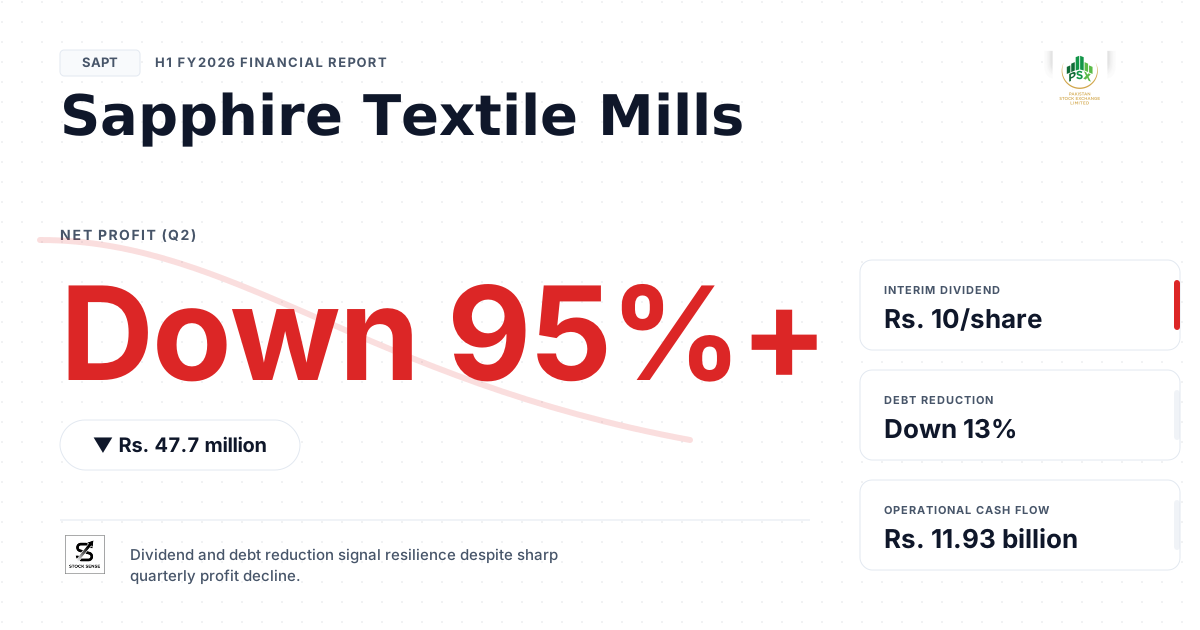
Sapphire Textile Mills Limited (SAPT) has announced an interim cash dividend of Rs. 10 per share (100%) for the year ending June 30, 2026, a strong signal of confidence to shareholders. This comes alongside a significant reduction in the company's debt, despite a notably challenging quarter that saw a sharp decline in consolidated profit. The results for the half year ended December 31, 2025, present a mixed picture, highlighting operational improvements in cash generation while facing margin pressures.
Financial Performance
For the second quarter ended December 31, 2025, SAPT's consolidated net turnover remained largely stable at approximately Rs. 30.9 billion, a marginal decrease from Rs. 31 billion in the same quarter last year. However, gross profit saw a significant 22% decline, falling to Rs. 5.89 billion from Rs. 7.56 billion. This pressure on margins translated into a drastic drop in quarterly profitability, with profit for the period plummeting by over 95% to Rs. 47.7 million, resulting in an Earnings Per Share (EPS) of just Rs. 1.20 compared to Rs. 44.97 previously.
Looking at the half-year performance, consolidated net turnover showed a slight increase of 0.7% to Rs. 69.98 billion. Despite this top-line stability, gross profit for the six months decreased by nearly 10% to Rs. 16.49 billion. Consequently, half-year profit for the period declined by 17% to Rs. 4.93 billion, with EPS at Rs. 139.44, down from Rs. 201.82 in the prior year's corresponding period.
A notable positive trend is the reduction in finance costs, which decreased by 26% for the half-year to Rs. 3.74 billion, providing some relief amidst the profitability challenges. Furthermore, the company demonstrated a remarkable turnaround in cash flow from operations, generating Rs. 11.93 billion in the first half of 2025, a significant improvement from a negative Rs. 2.46 billion in the same period last year. This strong operational cash generation is a crucial indicator of underlying business health.
The balance sheet reflects a strategic deleveraging, with total liabilities decreasing substantially by over 13% from Rs. 104.35 billion in June 2025 to Rs. 90.5 billion by December 2025. This was driven by a significant reduction in both short-term borrowings (down 25% to Rs. 16.2 billion) and long-term loans (down 11.5% to Rs. 33.66 billion).
Key Drivers & Segments
While specific segment performance details are not provided in the announcement, the decline in gross profit margins despite stable revenue suggests a combination of factors:
- Potential pressure on sales prices in the textile market.
- Higher input costs for raw materials or energy.
- A shift in product mix towards lower-margin offerings.
The significant improvement in operational cash flow indicates enhanced efficiency in managing working capital and core business operations, a critical factor in the current economic climate.
Management Actions & Strategic Signals
Management's decision to recommend an interim cash dividend of Rs. 10 per share for the current fiscal year (ending June 2026) is a strong signal of confidence in the company's future prospects and commitment to shareholder returns, especially given the challenging quarterly profit figures. This move suggests that the board views the recent quarter's dip as potentially transient or is prioritizing shareholder value creation.
The substantial reduction in both short-term and long-term debt is a clear strategic move to strengthen the company's financial position and reduce interest rate exposure. This deleveraging effort is well-supported by the robust cash flow generated from operations. Furthermore, the company continued to invest in its operations, with fixed capital expenditure increasing slightly to Rs. 2.97 billion for the half-year, indicating ongoing efforts to maintain and potentially enhance production capabilities.
Investor Takeaway
For investors, SAPT's latest results present a nuanced narrative. The sharp decline in quarterly profit and EPS is an immediate concern, suggesting significant pressure on core profitability. However, this is counterbalanced by several positive developments:
- The declaration of a Rs. 10 interim cash dividend, signaling management's commitment to shareholders and confidence in future earnings.
- A dramatic turnaround in operational cash flow, demonstrating improved efficiency and liquidity.
- A strategic and substantial reduction in both short-term and long-term debt, enhancing financial stability and reducing future interest burdens.
Rational investors should closely monitor the sustainability of gross margins in the coming quarters, as this remains a key profitability driver. The company's ability to maintain strong operational cash generation and continue its deleveraging efforts will be crucial catalysts. While the immediate quarterly profit dip is unexpected, the dividend and debt reduction initiatives paint a picture of a company focused on long-term financial health and shareholder value, even in a tough operating environment.