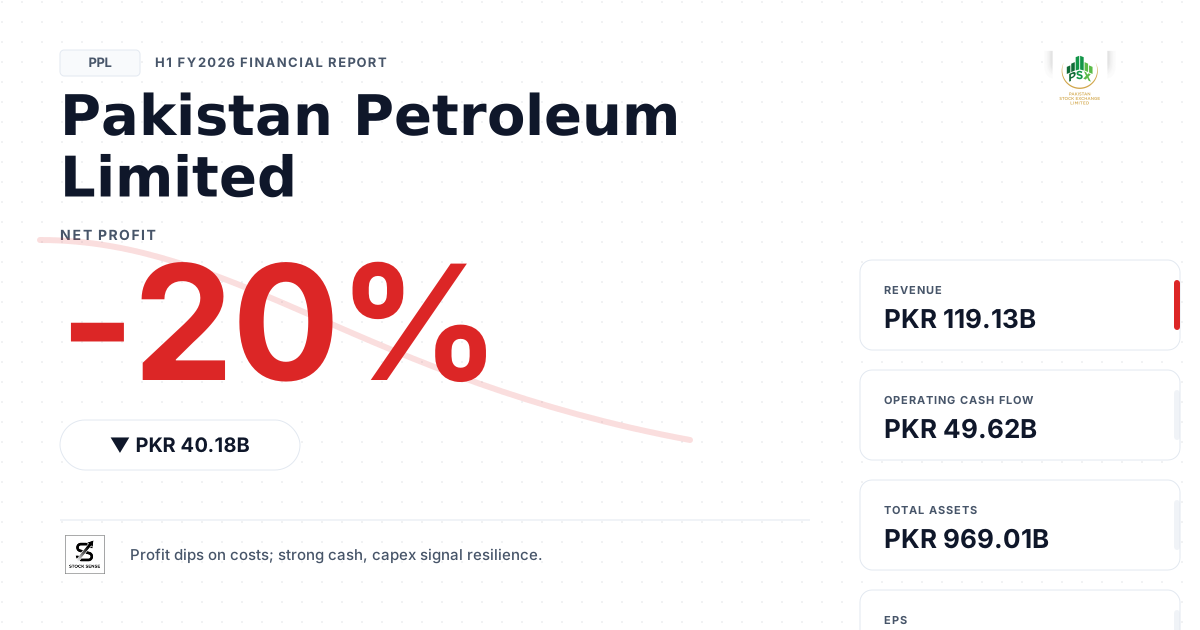
Pakistan Petroleum Limited (PPL) has reported a notable decline in its half-year profits for the period ended December 31, 2025, compared to the same period last year. This dip is primarily attributed to a significant increase in operating expenses and a sharp reduction in other income. However, the company's commitment to shareholder returns remains strong with a generous interim dividend, alongside a substantial increase in capital expenditure, signaling a long-term growth focus despite short-term pressures.
Financial Performance Overview
PPL's consolidated revenue for the first half of fiscal year 2026 stood at approximately PKR 119.13 billion, marking a 7% decrease from PKR 128.08 billion recorded in the first half of fiscal year 2025. This revenue contraction, coupled with rising costs, impacted the bottom line significantly.
Gross profit fell to PKR 70.57 billion from PKR 80.53 billion in the corresponding period last year. Consequently, Profit After Tax (PAT) saw a substantial decline of nearly 20%, settling at PKR 40.18 billion compared to PKR 49.95 billion previously. Basic earnings per share (EPS) mirrored this trend, decreasing from PKR 18.36 to PKR 14.77.
Despite the profit dip, PPL demonstrated healthy operational cash generation, with net cash from operating activities remaining strong at PKR 49.62 billion, slightly up from PKR 48.78 billion in the prior year. The balance sheet also showed resilience, with total assets growing to PKR 969.01 billion from PKR 929.39 billion (as of June 30, 2025), and total equity increasing to PKR 732.24 billion from PKR 705.02 billion over the same period. Cash and bank balances more than doubled, rising to PKR 13.21 billion from PKR 6.36 billion.
Key Drivers of Profitability Shift
The primary drag on profitability came from two key areas:
- Operating Expenses: These surged by approximately 10.7%, reaching PKR 30.60 billion from PKR 27.63 billion, indicating increased costs associated with operations.
- Other Income: A significant and unexpected drop of nearly 62% in 'Other Income' to PKR 5.78 billion from PKR 15.18 billion also heavily impacted the pre-tax profit. This decline was largely due to lower income from investments in treasury bills, reduced dividend income, and lower gains on re-measurement of investments.
Royalties and other levies, however, saw a notable 9.8% decrease, providing some relief on the cost front.
Management Actions & Strategic Signals
PPL's management is clearly focused on long-term growth and shareholder value, as evidenced by:
- Capital Expenditure (Capex): The company significantly ramped up its capital expenditure by 26%, investing PKR 18.20 billion compared to PKR 14.44 billion in the previous year. This substantial investment signals PPL's commitment to expanding its asset base and pursuing future growth opportunities.
- Dividends: The Board approved an interim cash dividend of Rs. 2.00 per share (20%) on Ordinary Shares and Rs. 1.00 per share (10%) on Convertible Preference Shares for the quarter ended December 31, 2025. Importantly, this is in addition to the Rs. 2.00 per share (20%) already paid for Ordinary Shares earlier in the year, bringing the total interim dividend for Ordinary Shares for the half-year to a robust Rs. 4.00 per share (40%). This demonstrates a strong and consistent commitment to rewarding shareholders.
- Debt Management: Long-term financing obligations saw a notable 9.6% reduction, indicating prudent financial management and a strengthening balance sheet.
Investor Takeaway
For investors, PPL's latest results present a mixed picture. While the decline in half-year profitability is a short-term concern, primarily driven by higher operating costs and a significant drop in other income, the underlying operational cash flow remains robust. The substantial increase in capital expenditure is a strong signal of management's confidence in future growth prospects and their willingness to invest for the long term.
PPL continues to be an attractive stock for income-focused investors due to its consistent and generous dividend payouts, totaling Rs. 4.00 per share for Ordinary Shares for the half-year. Rational investors should closely monitor the company's ability to manage its operating expenses and diversify its 'Other Income' streams in the coming quarters. The successful execution and impact of the ongoing capital projects on future revenue and profitability will be key catalysts to watch for a potential turnaround in earnings growth.