Nimir Resins Limited (NRSL) has reported a mixed set of results for the half-year ended December 31, 2025. While the company achieved a commendable increase in net profit for the six-month period, a closer look reveals significant operational cash flow challenges and a notable rise in short-term borrowings, alongside the absence of any dividend declaration.
Financial Performance Highlights
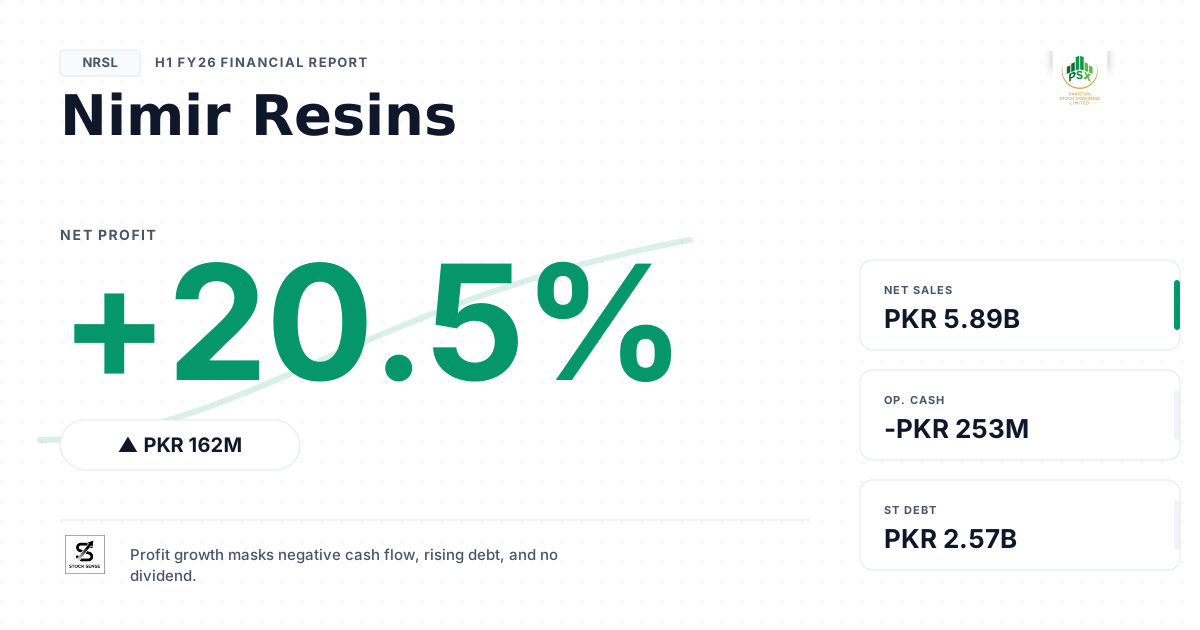
NRSL's net sales for the half-year surged by approximately 23.5% to PKR 5.89 billion (from PKR 4.77 billion in H1 FY25). This top-line growth translated into a 14.0% increase in gross profit to PKR 600 million (from PKR 526 million). Operating profit also saw a healthy rise of 10.3% to PKR 422 million. Crucially, net profit for the half-year climbed by 20.5% to PKR 162 million, yielding an EPS of PKR 1.15, up from PKR 0.95 in the same period last year.
However, the quarter-on-quarter performance (Q2 FY26 vs Q2 FY25) shows a more nuanced picture. While net sales grew by 27.6% to PKR 3.30 billion, net profit slightly declined to PKR 96.8 million (from PKR 97.2 million), resulting in a stagnant quarterly EPS of PKR 0.69. Gross margins slightly compressed to 10.2% for the half-year (from 11.0% last year) and 9.9% for the quarter (from 11.0% last year), indicating potential pressure on input costs or pricing power.
A key concern is the significant deterioration in operating cash flow. The company reported a negative net cash flow from operating activities of PKR 253 million for the half-year, a sharp reversal from the positive PKR 110 million generated in the prior year. This suggests that despite higher sales, the company struggled to convert profits into cash, possibly due to increased working capital requirements.
The balance sheet reflects this trend. Trade debts increased substantially by 29.2% to PKR 2.96 billion (from PKR 2.29 billion at June 30, 2025), indicating a rise in credit sales. To manage liquidity, short-term borrowings surged by over 24.7% to PKR 2.57 billion (from PKR 2.06 billion), contributing to a higher cash and bank balance of PKR 342 million (from PKR 152 million). Total assets grew by 7.5% to PKR 7.29 billion from PKR 6.78 billion.
Operational Insights & Strategic Signals
The robust revenue growth suggests strong demand for NRSL's resin products, likely driven by industrial activity in sectors such as paint, coatings, and construction. The increase in trade receivables, however, points towards a more credit-intensive sales environment, which can strain working capital.
A notable positive contributing to the bottom line was the significant 28.5% reduction in finance costs, which decreased to PKR 139 million for the half-year from PKR 194 million in the prior period. This reduction provided a crucial boost to profitability, even as the company's short-term borrowings increased on the balance sheet, suggesting either a more favorable interest rate environment or effective debt management during the period.
The Board of Directors has not recommended any cash dividend, bonus shares, or right shares for the period. This decision, while potentially disappointing for income-focused investors, might reflect a strategy to conserve cash amidst the negative operating cash flow and increased working capital needs, or to fund future growth internally.
Capital expenditure remained modest, with PKR 3 million spent on property, plant, and equipment and PKR 36 million on capital work in progress during the half-year, totaling PKR 39 million. The significant increase in short-term borrowings suggests a reliance on debt to finance working capital and potentially bridge the gap left by negative operating cash flow.
Investor Takeaway
For investors, NRSL presents a mixed bag. The company's ability to grow its top-line and half-year profits is encouraging, signaling resilience in demand for its products. However, the negative operating cash flow and the substantial increase in short-term debt are critical areas of concern that warrant close monitoring.
The absence of a dividend payout, despite profit growth, reinforces the need for cash conservation. Investors should watch for improvements in cash flow generation, a reduction in trade receivables, and the company's strategy for managing its increased debt load in the coming quarters. Sustained profitability combined with better cash conversion will be key to unlocking long-term shareholder value.