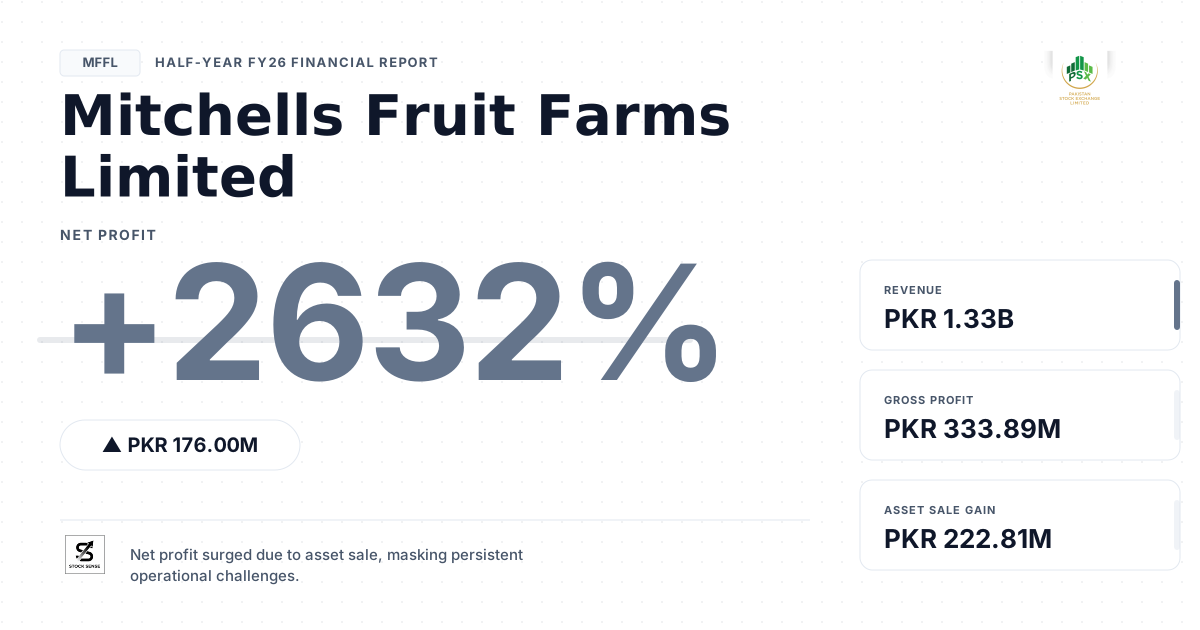
Mitchells Fruit Farms Limited (MFFL) has announced a striking net profit of PKR 176.00 million for the six-month period ending December 31, 2025, a dramatic increase from the PKR 6.44 million reported in the corresponding period last year. This impressive surge, however, is predominantly fueled by a significant one-off gain from asset disposal, effectively obscuring persistent operational challenges and a net loss recorded in the most recent quarter.
Financial Performance Overview
For the half-year, MFFL's revenue experienced a modest 4.4% increase, reaching PKR 1.33 billion (PKR 1,325.64 million) from PKR 1.27 billion (PKR 1,269.56 million) in the prior year. However, this top-line growth was overshadowed by a 4.6% decline in gross profit, falling to PKR 333.89 million from PKR 349.99 million. This indicates significant pressure on margins, with the gross margin contracting to 25.2% from 27.6% in the previous period.
Operating profit for the six-month period sharply declined by nearly 40% to PKR 38.71 million. Even more concerning, the second quarter (Q2 FY26) alone registered a net loss of PKR 7.72 million. While this represents a 13% improvement from the PKR 8.87 million loss in Q2 FY25, it starkly underscores the persistent operational challenges. The half-year Earnings Per Share (EPS) surged to PKR 7.69, a direct consequence of the extraordinary income, whereas Q2 EPS remained negative at PKR 0.34.
On the balance sheet, MFFL demonstrated positive strides. Shareholders' equity significantly increased to PKR 756.83 million from PKR 580.82 million, primarily reflecting the retained earnings from the period's profit. Furthermore, total current liabilities saw a substantial 23% reduction, falling from PKR 1.23 billion (PKR 1,226.38 million) to PKR 944.04 million, largely attributable to strategic debt repayments.
Key Drivers & Business Segments
The undeniable primary catalyst for the half-year's impressive net profit was a substantial 'Other Income' of PKR 231.11 million. A closer examination of the cash flow statement reveals that PKR 222.81 million of this 'Other Income' stemmed from a significant gain on the disposal of property, plant, and equipment. This non-recurring, one-off event was the dominant factor in boosting profitability, effectively overshadowing the underlying performance of the core fruit processing and farming businesses, which continued to grapple with margin pressures and operational hurdles.
No specific segment-wise performance details were provided in the financial statements to assess individual business lines.
Management Actions & Strategic Signals
MFFL has demonstrated commendable progress in strengthening its balance sheet through significant deleveraging. The company successfully repaid PKR 204.00 million in loans to related parties and achieved a net reduction of PKR 89.85 million in finances under markup arrangements. This strategic focus on debt reduction is a strong positive signal, indicating improved financial stability and the potential for reduced finance costs in upcoming periods.
Capital expenditure on property, plant, and equipment remained minimal at PKR 2.08 million, suggesting a period of limited investment in expansion. The substantial proceeds from asset disposal, therefore, strongly indicate a strategic move towards rationalizing non-core assets or divesting underperforming segments to optimize the asset base. Notably, the financial announcement did not include any information regarding dividends for shareholders.
Investor Takeaway
While MFFL's half-year results present a robust net profit, discerning investors must exercise considerable caution and look critically beyond the headline figure. The impressive profit is overwhelmingly a consequence of an extraordinary, non-recurring gain from asset disposal. The underlying operational performance, characterized by declining gross and operating profits and a persistent quarterly loss, unequivocally suggests that the core business continues to navigate a challenging and difficult operating environment.
For astute investors, critical areas to monitor moving forward include the sustainability of revenue growth, tangible signs of improvement in gross margins, and the quantifiable impact of the recent debt reduction on future finance costs. The pivotal question remains whether management can effectively leverage the strengthened balance sheet to foster a more robust and consistently profitable core business performance in the quarters ahead. The elevated EPS for this period, while numerically strong, must be interpreted strictly within the context of its singular, non-recurring driver.