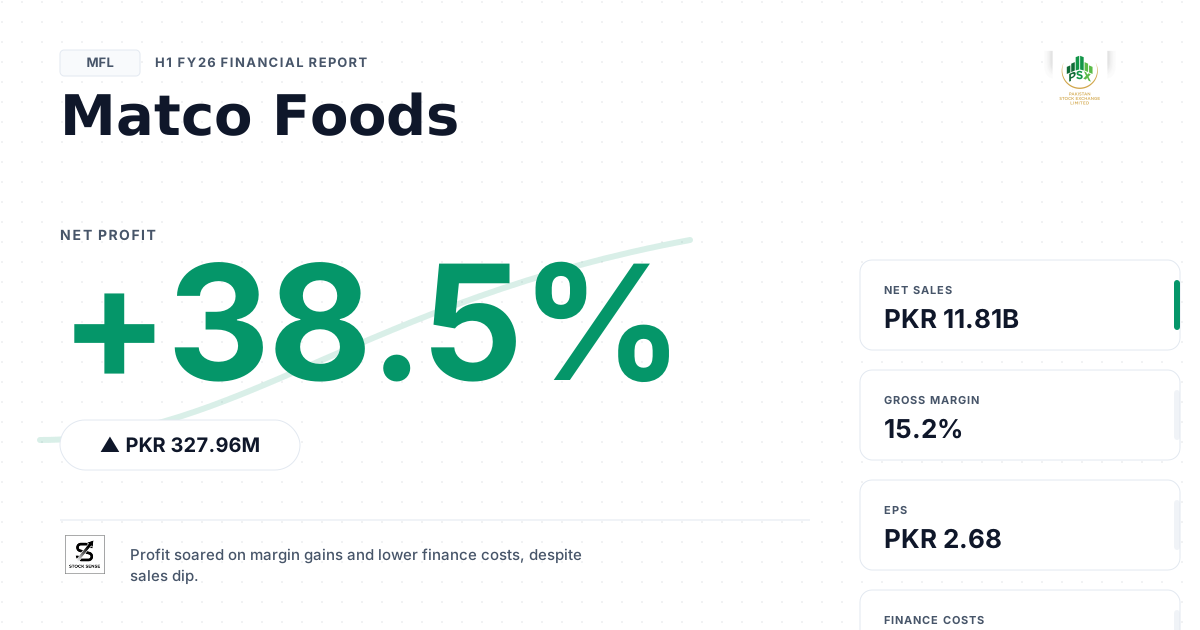
Matco Foods Limited (MFL) has released its consolidated financial results for the second quarter and half-year ended December 31, 2025, presenting a nuanced yet ultimately positive outlook for investors. Despite a notable contraction in net sales, the company achieved a significant surge in profitability, primarily fueled by enhanced gross margins and a substantial reduction in finance costs. However, the Board of Directors did not recommend any dividend for the period, signaling a focus on internal capital allocation.
Consolidated Financial Performance Highlights
For the six months ended December 31, 2025, MFL's consolidated net sales registered a decrease of approximately 8.8% to PKR 11.81 billion, down from PKR 12.94 billion in the corresponding period last year. This revenue dip suggests ongoing market challenges or strategic adjustments in sales volumes. (Source: Consolidated Interim Statement of Profit or Loss)
Despite the sales decline, MFL demonstrated impressive operational efficiency. Gross profit increased by 1.7% to PKR 1.79 billion (H1 FY25: PKR 1.76 billion), leading to a significant expansion in the gross profit margin from 13.6% to 15.2%. This improvement underscores effective cost management or a favorable shift in product mix and pricing power, particularly for its core rice processing operations. (Source: Consolidated Interim Statement of Profit or Loss)
Operating profit, however, experienced a 14.1% decline to PKR 950.51 million (H1 FY25: PKR 1.11 billion). The most impactful positive contribution to the bottom line came from a substantial 32.2% reduction in finance costs, which fell to PKR 727.20 million (H1 FY25: PKR 1.07 billion). This significant decrease played a pivotal role in bolstering overall profitability. (Source: Consolidated Interim Statement of Profit or Loss)
Ultimately, MFL's consolidated profit for the period surged by an impressive 38.5% to PKR 327.96 million, compared to PKR 236.75 million in the prior year. This translated into an improved Earnings Per Share (EPS) of PKR 2.68, up from PKR 1.93, reflecting strong bottom-line growth despite revenue headwinds. (Source: Consolidated Interim Statement of Profit or Loss)
From a cash flow perspective, the company showed improvement in managing operating outflows. Net cash used in operating activities reduced by approximately 21.7% to PKR 2.05 billion (H1 FY25: PKR 2.62 billion). However, investing activities shifted from generating PKR 45.09 million in the previous year to consuming PKR 126.74 million in the current period. (Source: Consolidated Interim Statement of Cash Flows)
On the balance sheet, total consolidated assets expanded to PKR 33.92 billion as of December 31, 2025. A key point for investors is the increase in total borrowings, which rose by approximately 15.3% from PKR 14.80 billion (June 30, 2025) to PKR 17.06 billion. Inventory levels also increased by about 22.8% to PKR 16.78 billion, which could be a strategic build-up for anticipated future sales or an indication of slower inventory turnover. (Source: Consolidated Interim Statement of Financial Position)
Key Drivers and Operational Insights
While detailed segment breakdowns are not provided in the interim consolidated financial statements, the improved gross margin is a clear indicator of enhanced efficiency within MFL's core rice processing and sales operations. This could stem from optimized procurement strategies, more efficient production processes, or a favorable pricing environment for its products, particularly its flagship Falak Basmati Rice brand.
The significant reduction in finance costs is another critical driver of the improved bottom line. This could be attributed to a combination of factors, including:
- Potentially lower average interest rates on existing debt or new borrowings.
- Proactive debt restructuring efforts by management to optimize financing costs.
- Reduced reliance on high-cost short-term financing during the period.
Management Actions and Strategic Signals
The official announcement did not include specific forward-looking guidance or detailed strategic plans from management. However, the consolidated financial results themselves offer some key signals:
- Capital Expenditure: Fixed capital expenditure for the six months was PKR 130.50 million, lower than the PKR 177.05 million incurred in the previous year. This suggests a more conservative approach to expansion or a focus on optimizing existing assets. (Source: Consolidated Interim Statement of Cash Flows)
- Debt Management: While finance costs decreased, the overall debt level has risen. This indicates that while the cost of borrowing may have improved, the company continues to rely on debt to finance its operations and working capital, particularly with the increase in inventory.
- Dividend Policy: The Board of Directors did not recommend any cash dividend, bonus shares, or right shares for the period. This decision, despite improved profit, suggests a cautious approach focused on retaining earnings for reinvestment, debt reduction, or strengthening the balance sheet amidst ongoing economic uncertainties. (Source: PSX Announcement)
Investor Takeaway: Navigating Growth and Debt
MFL's latest consolidated results present a complex but encouraging picture for investors. The robust growth in net profit and EPS, driven by impressive gross margin expansion and a significant reduction in finance costs, demonstrates the company's resilience and operational improvements in a challenging economic environment. This turnaround in profitability is a strong positive signal for the company's underlying business health.
However, rational investors should also closely consider the declining sales revenue and the continued increase in overall debt levels. The absence of a dividend, despite improved earnings, might be a point of concern for income-focused investors, suggesting a cautious approach by management to shore up financial strength.
Going forward, investors should closely monitor MFL's ability to reignite revenue growth, sustain its improved gross margins, and, critically, effectively manage its increasing debt burden. The trajectory of interest rates in Pakistan will also remain a significant factor impacting future finance costs. The next few quarters will be crucial in determining if these improvements represent a sustained turnaround or a temporary reprieve in profitability.