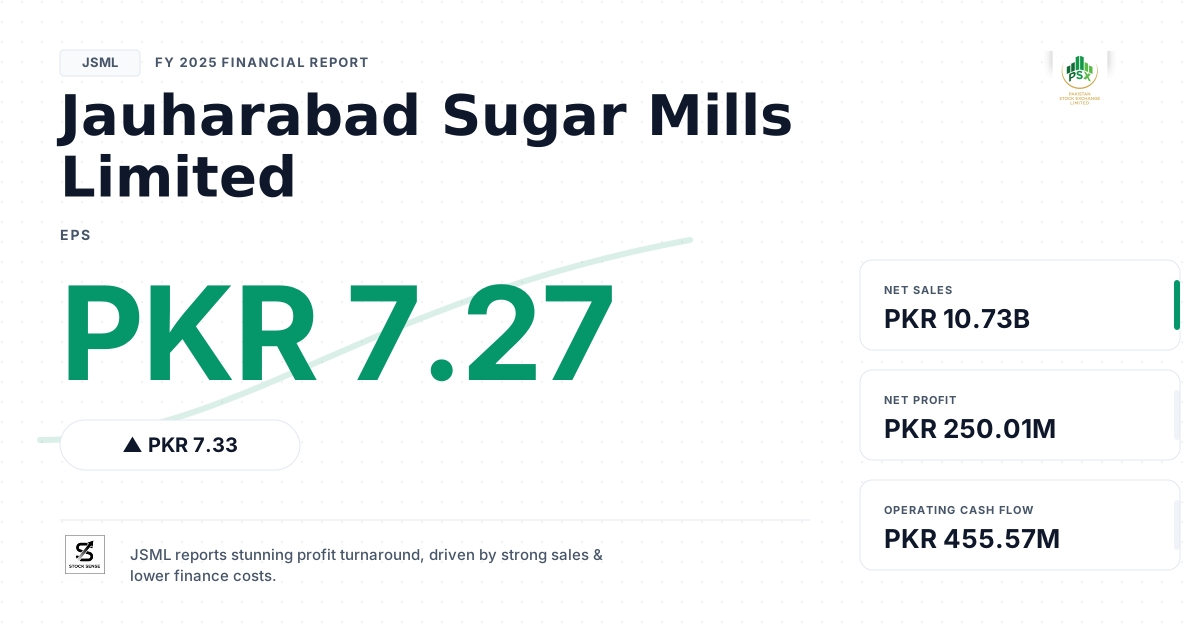
Jauharabad Sugar Mills Limited (JSML) has unveiled its financial results for the year ended September 30, 2025, showcasing a dramatic surge in profitability. The company transitioned from a nominal net profit of PKR 1.88 million in the previous year to a substantial profit of PKR 250.01 million, fueled by robust revenue growth and a significant reduction in finance costs. Despite this impressive financial rebound, culminating in an Earnings Per Share (EPS) of PKR 7.33, the Board has opted not to recommend any cash dividend or bonus shares for shareholders.
Financial Performance: A Deep Dive
JSML's top-line performance was exceptional, with net sales surging by 34.15% to PKR 10.73 billion in 2025, up from PKR 7.99 billion in the prior year. This strong revenue growth was efficiently converted into gross profit, which climbed by 46.79% to PKR 1.48 billion, signaling improved operational efficiency and enhanced pricing power. The gross profit margin also expanded healthily, rising from 12.62% to 13.81%.
Operating profit mirrored this upward trend, increasing by 54.73% to PKR 1.16 billion. A pivotal factor in boosting the bottom line was the substantial reduction in finance costs, which decreased by 31.54% to PKR 649.71 million from PKR 949.09 million last year. This significant saving, combined with operational gains, propelled the company to report a profit after taxation of PKR 250.01 million, a remarkable improvement from PKR 1.88 million in 2024. Consequently, EPS soared to PKR 7.33, a stark contrast to PKR 0.06 in the previous year.
From a balance sheet perspective, total assets expanded, primarily driven by an increase in Property, Plant and Equipment (PPE) by over PKR 1.21 billion, indicating ongoing capital investment. Accumulated profits (revenue reserve) also grew by 33.89% to PKR 1.45 billion, reflecting the year's strong earnings retention. Crucially, operating cash flows witnessed a dramatic reversal, generating PKR 455.57 million in 2025 compared to a negative PKR 992.83 million used in operations last year, underscoring a significant improvement in liquidity and operational health.
Key Drivers & Emerging Concerns
The primary catalyst for JSML's impressive turnaround was robust sales growth, indicative of strong market demand for its products. This was effectively supported by better cost management, as evidenced by the improved gross profit margins. The substantial decrease in finance costs proved critical in translating operating gains into net profit, likely a result of lower interest rates and strategic debt management.
- Revenue Growth: A 34.15% increase in net sales highlights strong market presence and product demand.
- Margin Expansion: Improved gross profit margin (from 12.62% to 13.81%) suggests enhanced operational efficiency and pricing strategies.
- Finance Cost Reduction: A 31.54% drop in finance costs significantly amplified net profitability.
- Inventory Optimization: Stock-in-trade saw a substantial 60.3% reduction from PKR 2.90 billion to PKR 1.15 billion, implying faster sales cycles or optimized inventory levels.
However, a critical area for investor scrutiny is the staggering increase in trade debts, which surged over 22-fold from PKR 53.03 million in 2024 to PKR 1.24 billion in 2025. This dramatic rise could signal a significant shift towards credit sales or a substantial slowdown in collection cycles, potentially impacting working capital and future cash flow generation. Investors should closely monitor this trend.
Strategic Capital Allocation & Outlook
The company continued to invest in its fixed assets, with purchases of property, plant, and equipment amounting to PKR 320.28 million, although this was lower than the previous year's PKR 768.58 million. This indicates ongoing efforts to maintain or enhance operational capacity. The balance sheet also reflects a significant revaluation surplus on property, plant, and equipment of PKR 1.11 billion for the year, which, while a non-cash item, substantially boosts the company's equity base.
Despite the robust profit and EPS, the Board's decision to withhold cash dividends, bonus, or right shares suggests a clear strategy of capital retention. This capital is likely earmarked for future expansions, further debt reduction, or strengthening the balance sheet, which could be beneficial for long-term growth but may temper enthusiasm among income-seeking investors.
Investor's Lens: Navigating JSML's Trajectory
JSML's latest financial results paint a compelling picture of a company executing a significant turnaround, characterized by strong revenue growth and impressive profitability. The substantial increase in EPS and the positive shift in operating cash flow are undeniable positives, signaling improved operational health and efficiency. The marked reduction in finance costs is particularly encouraging in the current economic climate.
For investors, the sustainability of this revenue growth and margin improvement will be paramount. While the absence of a dividend might be a short-term concern, it aligns with a strategy focused on reinvestment for future growth or fortifying the company's financial position. However, the dramatic surge in trade debts warrants close attention to assess collection efficiency and its potential impact on working capital. Overall, JSML appears to be on a positive trajectory, but its capital allocation strategy and management of receivables will be crucial determinants of long-term shareholder value creation.