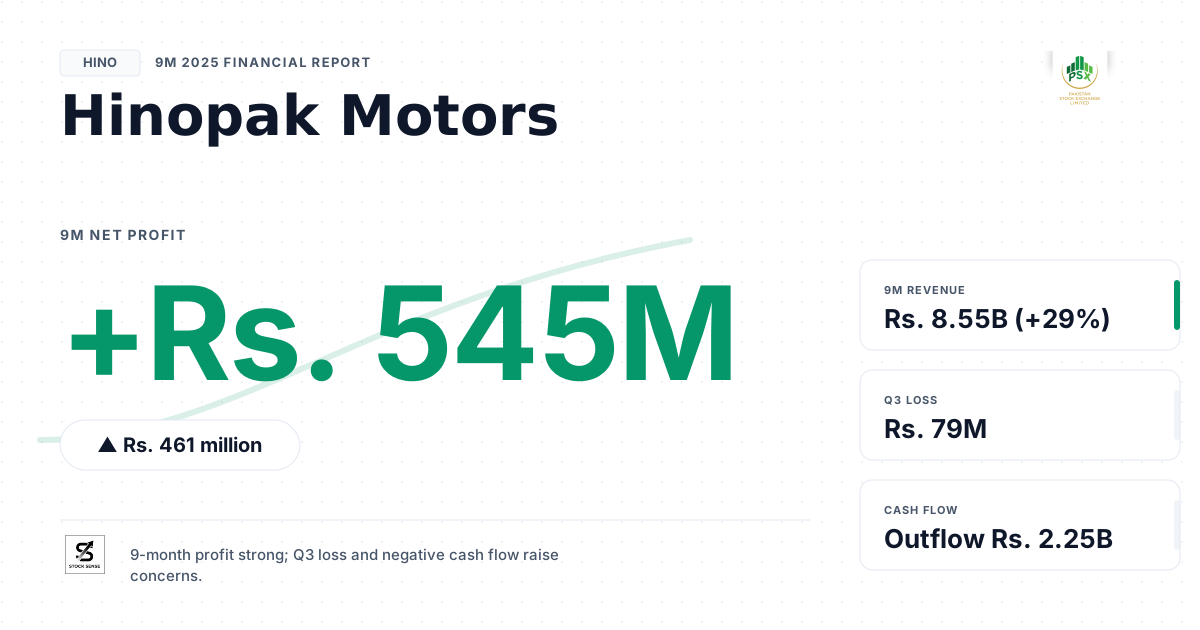
Hinopak Motors Limited (HINO) has reported a significant turnaround, posting a profit of Rs. 461 million for the nine months ended December 31, 2025, a substantial improvement from a loss of Rs. 84 million in the same period last year. This positive nine-month performance, however, is contrasted by a challenging third quarter (October-December 2025) which saw the company revert to a loss of Rs. 79 million and a noticeable decline in revenue. Investors will need to weigh the overall positive trend against recent operational headwinds and a concerning cash flow situation.
Financial Performance Highlights
For the nine months, HINO's revenue from contracts with customers surged to Rs. 8.55 billion, a healthy 29% increase compared to Rs. 6.64 billion in the prior year. This top-line growth, combined with improved cost management, led to a more than doubling of gross profit to Rs. 1.69 billion. Operating profit also saw a robust increase to Rs. 868 million from Rs. 231 million, culminating in a strong profit after tax of Rs. 461 million, translating to earnings per share (EPS) of Rs. 18.59.
However, the third quarter (October-December 2025) presents a different picture. Revenue for the quarter dropped by approximately 18.5% to Rs. 1.64 billion from Rs. 2.01 billion in the same quarter last year. Despite an improvement in gross margin for the quarter, rising distribution and administration expenses, coupled with higher finance costs, led to an operating loss of Rs. 13 million (compared to a profit of Rs. 6 million last year) and a net loss of Rs. 79 million, worsening from a Rs. 37 million loss in Q3 2024. This indicates a significant squeeze on profitability in the most recent period.
A critical area of concern is the company's cash flow. For the nine months, HINO reported a net cash outflow of Rs. 2.25 billion from operating activities, a stark reversal from the Rs. 1.86 billion generated in the previous year. This has led to a substantial negative cash and cash equivalents balance of Rs. 2.70 billion at period-end, signaling significant liquidity challenges.
Key Drivers & Operational Insights
While the financial statements do not provide a detailed breakdown by business segment, the overall revenue growth for the nine months suggests a generally favorable market for commercial vehicles earlier in the year. The decline in Q3 revenue, however, points to a recent slowdown in sales. The substantial increase in inventory to Rs. 5.67 billion from Rs. 4.69 billion could indicate either slower sales conversion or a strategic build-up in anticipation of future demand. A notable increase in distribution costs for the nine months (Rs. 531 million vs. Rs. 292 million) and specifically for Q3 (Rs. 305 million vs. Rs. 100 million) also impacted profitability, suggesting higher selling efforts or rising logistical expenses.
Strategic Signals & Balance Sheet Shifts
The company's capital expenditure for property, plant, and equipment saw a modest increase to Rs. 63 million for the nine months. A significant development on the balance sheet is the dramatic rise in short-term borrowings, which soared to Rs. 2.71 billion from Rs. 592 million at the end of March 2025. This surge in debt, while potentially addressing immediate liquidity needs, has significantly increased finance costs, particularly in the recent quarter, and highlights the underlying pressure from negative operating cash flow. No cash dividend, bonus, or right shares have been recommended for the period, which might disappoint income-focused investors.
Investor Takeaway: Navigating HINO's Mixed Signals
HINO's nine-month results present a mixed picture. While the company achieved a commendable profit turnaround over the longer period, the recent third quarter performance raises concerns about current operational momentum. The significant negative operating cash flow and the sharp increase in short-term borrowings are critical issues that demand investor attention.
Rational investors should closely monitor the following:
- The company's ability to reverse the Q3 revenue decline and return to profitability in the coming quarters.
- Management's strategy to control escalating distribution and administration expenses.
- Measures to improve cash flow from operations and reduce the reliance on short-term debt.
- The trajectory of inventory levels, indicating either demand strength or potential overstocking.
The lack of dividend declaration, coupled with the worsening Q3 loss and negative cash flow, suggests that HINO is currently prioritizing financial stability and operational adjustments over shareholder distributions. The company's ability to navigate these challenges will be key to its future performance on the PSX.