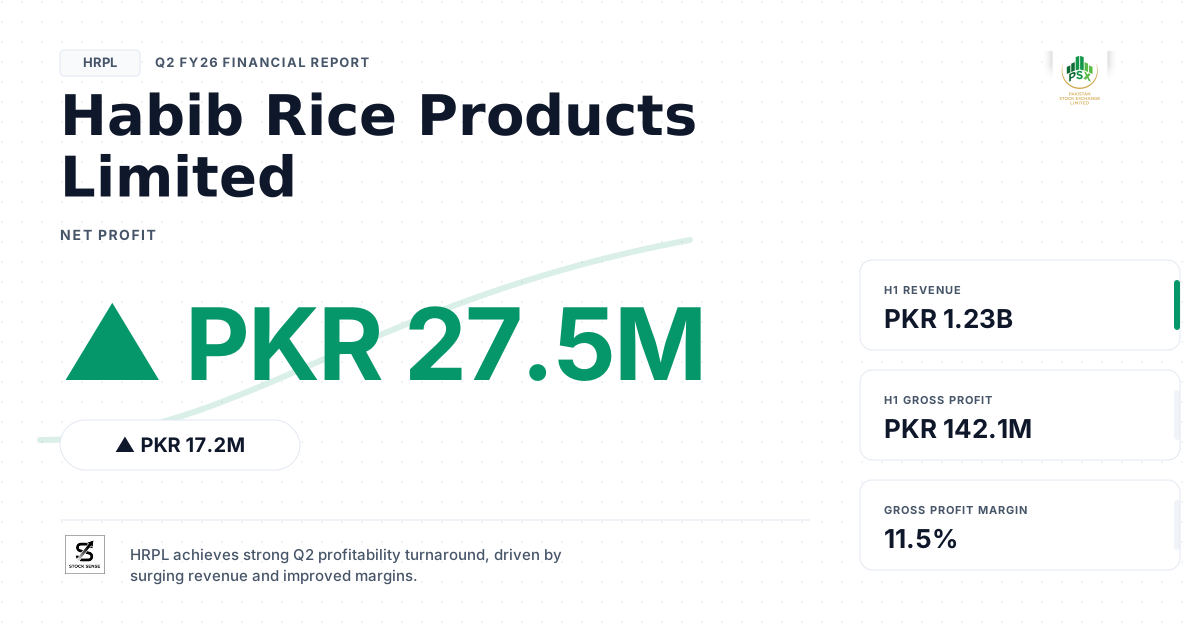
Habib Rice Products Limited (HRPL), a long-standing producer of organic and non-GM conventional rice-based sweeteners, polyols, and protein concentrates, has reported a significant improvement in its financial performance for the half-year ended December 31, 2025. While the company recorded a negligible net loss for the full six-month period, the second quarter alone saw a robust return to profitability, marking a notable turnaround from previous losses and suggesting a positive shift in operational dynamics.
Financial Performance Highlights
HRPL's turnover for the half-year (H1 FY26) surged to PKR 1.23 billion, an 18% increase from PKR 1.05 billion in the same period last year (H1 FY25). The second quarter (Q2 FY26) was particularly strong, with revenue jumping 23% to PKR 736 million from PKR 599 million in Q2 FY25.
Gross profit for H1 FY26 significantly increased by over 80% to PKR 142.1 million (from PKR 78.6 million in H1 FY25), driving a substantial expansion in the gross profit margin from 7.5% to 11.5%. This margin improvement was critical in narrowing losses. The company posted a net loss of only PKR 1.1 million for H1 FY26, a dramatic reduction from the PKR 79.9 million loss in the prior year. Crucially, Q2 FY26 alone generated a net profit of PKR 17.2 million (EPS PKR 0.43), a stark contrast to the PKR 10.3 million loss in Q2 FY25. This quarterly performance is a key highlight, signaling a potential inflection point.
Operating activities consumed PKR 69.9 million in cash during H1 FY26, primarily due to substantial increases in working capital, particularly inventory. However, the company successfully secured significant financing, leading to a net increase in cash and equivalents. Total assets grew to PKR 1.57 billion by December 31, 2025, from PKR 1.38 billion at June 30, 2025. This growth was supported by increased inventory (up by PKR 128 million) and a notable rise in both long-term (from PKR 38 million to PKR 113.8 million) and short-term financing (new PKR 59.7 million).
Key Drivers & Strategic Insights
The robust revenue growth suggests either higher sales volumes or improved pricing power for HRPL's diverse range of rice-based products. The significant expansion in gross margins indicates better cost management, a more favorable product mix, or potentially a reduction in raw material costs relative to sales prices. The substantial increase in 'stock in trade' (inventory) could imply management's confidence in future demand, or it could be a strategic build-up to mitigate supply chain risks and capitalize on anticipated sales.
Management Actions & Corporate Governance
HRPL invested PKR 55 million in capital expenditure during H1 FY26, a substantial increase from PKR 11.5 million in the prior year. This suggests ongoing investment in property, plant, and equipment, potentially for expansion or modernization to support future growth. The company actively pursued financing, obtaining PKR 75.8 million in long-term financing and PKR 59.7 million in short-term running finance. This influx of capital was crucial for funding operations, working capital needs, and the increased capex. Furthermore, the appointment of Mr. Faisal Adamjee as an Independent Director, replacing Dr. Salma Habib, reflects the company's commitment to maintaining robust corporate governance standards as per regulatory requirements.
Investor Outlook
HRPL's latest results present a compelling narrative of recovery and potential. The return to profitability in Q2 FY26, coupled with strong revenue growth and margin expansion, is an encouraging sign for investors. However, several key areas warrant close attention for sustained performance:
- Sustained Profitability: Investors should closely monitor whether the positive momentum in Q2 can be sustained in subsequent quarters and translate into consistent full-year profitability.
- Working Capital Management: The negative cash from operations due to inventory build-up needs attention. Efficient working capital management will be key to improving operational cash flow and reducing reliance on external financing.
- Debt Levels: While necessary for growth and operations, the increase in both long-term and short-term debt needs to be monitored for its impact on finance costs and overall financial leverage. Prudent debt management will be crucial.
- Dividend Policy: The announcement did not mention any dividend declaration. Investors will be keen to see if sustained profitability translates into shareholder returns in the future, potentially through dividends or capital appreciation.