Fast Cables Limited (FCL) has reported a mixed bag of results for the half-year ended December 31, 2025. While the company achieved commendable revenue growth for the six-month period, a closer look at the second quarter reveals significant pressure on profitability and margins, a trend investors will need to monitor closely. The board has not recommended any cash dividend, bonus shares, right shares, or any other corporate action for this period.
Financial Performance Overview
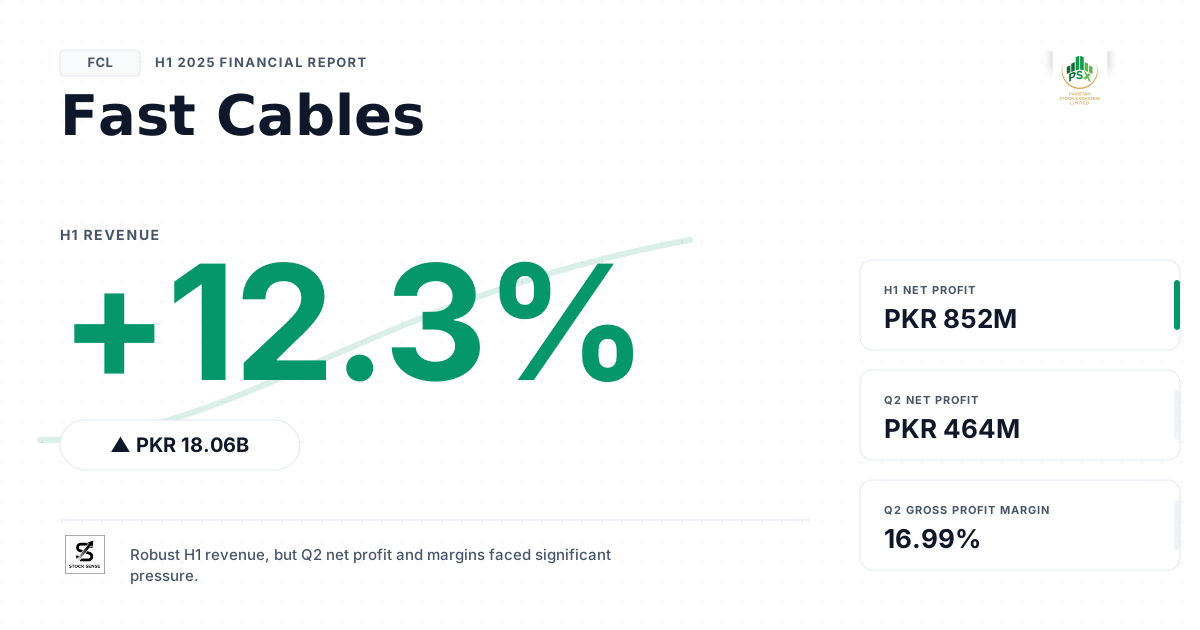
For the half-year (H1 2025), FCL's revenue surged by 12.3% year-on-year, reaching PKR 18.06 billion. This growth translated into an 11.6% increase in gross profit to PKR 3.08 billion. However, the gross profit margin marginally declined from 17.18% in H1 2024 to 17.06% in H1 2025. Net profit for H1 also saw a healthy 12.3% increase, reaching PKR 852 million, resulting in an Earnings Per Share (EPS) of PKR 1.32, up from PKR 1.18 in the prior year.
However, a deeper dive into the second quarter (Q2 2025) reveals a different picture. While Q2 revenue grew by 6.2% year-on-year to PKR 9.42 billion, gross profit for the quarter actually declined by 5.3% compared to Q2 2024. This led to a notable compression in the Q2 gross profit margin, falling from 19.15% in Q2 2024 to 16.99% in Q2 2025. Consequently, Q2 net profit decreased by 16% year-on-year to PKR 464 million, with Q2 EPS dropping to PKR 0.72 from PKR 0.86.
On a positive note, finance costs for H1 decreased by 13% to PKR 776 million, indicating some efficiency in debt management despite a challenging interest rate environment. Conversely, other income saw a substantial decline, falling from PKR 484 million in H1 2024 to PKR 210 million in H1 2025, impacting overall profitability.
The balance sheet shows total assets growing by 4.4% to PKR 36.54 billion as of December 31, 2025, with an increase in Property, Plant & Equipment suggesting ongoing capital expenditure. However, trade debts rose significantly from PKR 7.83 billion to PKR 8.98 billion, and cash balances dropped sharply from PKR 830 million to PKR 286 million. Short-term borrowings also increased from PKR 11.47 billion to PKR 13.80 billion, highlighting an increased reliance on debt for working capital needs.
Key Drivers & Margin Pressures
The financial statements do not provide a detailed breakdown of revenue by product segment or specific drivers. However, the overall H1 revenue growth suggests continued market demand for Fast Cables' products. The significant pressure on gross margins observed in Q2 indicates that input costs, such as raw materials and energy, likely outpaced the company's ability to adjust pricing or manage its sales mix effectively, eroding profitability despite top-line expansion.
Strategic Signals and Shareholder Actions
FCL appears to be investing in its future, with an increase in Property, Plant & Equipment and Capital Work in Progress, signaling ongoing capital expenditure aimed at expanding or upgrading production capacity. This could support future growth, but it also contributed to a higher use of cash in investing activities during the period.
While H1 finance costs decreased, the substantial increase in short-term borrowings coupled with a sharp decline in cash balances points to a growing reliance on debt to fund operations and working capital. This trend warrants close monitoring by investors, especially concerning liquidity and financial leverage.
While the board has not recommended any corporate action for the half-year ended December 31, 2025, the company did undertake significant shareholder-related activities during this period. The statement of changes in equity reflects a bonus issue of shares worth PKR 157 million, which increased the paid-up capital. Additionally, a final cash dividend of PKR 0.50 per share (5%) for the fiscal year ended June 30, 2025, was paid to shareholders during this half-year.
Investor Takeaway
Investors should view these results with a nuanced perspective. While the overall H1 revenue growth and net profit figures are positive, the underlying weakness in Q2, particularly the sharp decline in gross margins and net profit, is a critical concern. The company's ability to maintain top-line growth is encouraging, but profitability is clearly under pressure, raising questions about sustainable earnings in a challenging economic environment.
Key areas for investors to watch in the coming quarters include:
- The company's ability to manage rising input costs and restore gross margins, especially in the current inflationary environment.
- Trends in trade receivables and the effectiveness of working capital management.
- Further updates on capital expenditure projects and their expected impact on future capacity and efficiency.
- The company's strategy for managing its short-term debt and improving its cash position.
- Future dividend declarations, as the absence of a dividend for this period might impact investor sentiment.