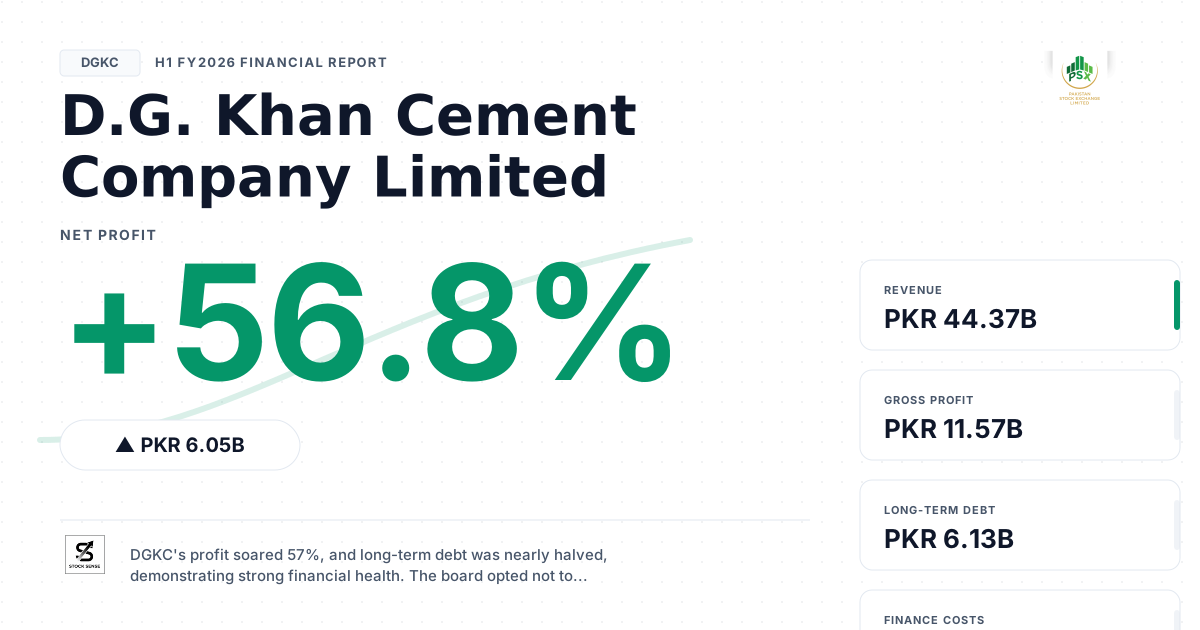
D.G. Khan Cement Company Limited (DGKC) has announced an impressive financial performance for the first half of fiscal year 2026, ending December 31, 2025. The un-audited results reveal a substantial 56.8% surge in profitability, fueled by robust revenue growth and significantly enhanced operational efficiency, alongside a dramatic reduction in its long-term debt. However, the Board of Directors has opted not to recommend any cash dividend for this period, signaling a strategic focus on internal strengthening and financial resilience.
Financial Highlights: A Deep Dive
Consolidated revenue for the half-year climbed to PKR 44.37 billion, marking a robust 10.5% increase compared to PKR 40.15 billion reported in the same period last year. This growth underscores either healthy market demand or effective pricing strategies. Gross profit jumped by 28.8% to PKR 11.57 billion (from PKR 8.98 billion), pushing gross margins from 22.4% to 26.1%. This expansion highlights improved cost management and operational leverage. Consequently, profit for the period skyrocketed by 56.8% to PKR 6.05 billion, up from PKR 3.86 billion. Earnings Per Share (EPS) mirrored this success, rising sharply to PKR 13.59 from PKR 8.42.
A pivotal positive was the dramatic 59.8% reduction in finance costs, which fell to PKR 1.12 billion from PKR 2.79 billion in the prior year. This substantial decrease directly contributed to the boosted bottom line, reflecting successful debt management. DGKC generated strong operating cash flows of PKR 9.69 billion, a 46.2% increase year-on-year. The balance sheet strengthened considerably, with total equity growing by 17.5% to PKR 117.05 billion. Crucially, long-term debt was nearly halved, falling by 54.4% to PKR 6.13 billion from PKR 13.43 billion at June 30, 2025. While short-term borrowings saw a significant 41.9% increase to PKR 17.52 billion from PKR 12.35 billion, overall financial risk appears to be rebalanced. Cash and bank balances also improved significantly by 152.8% to PKR 2.42 billion from PKR 0.96 billion.
Key Performance Drivers
- The impressive gross margin expansion suggests a combination of factors, including improved cement demand or better pricing power in the market, favorable input costs (particularly for energy like coal), and enhanced operational efficiencies across its production facilities.
- The sharp reduction in finance costs was a major tailwind, primarily stemming from proactive debt repayments of over PKR 8.08 billion during the half-year, and potentially a more benign interest rate environment compared to the previous year.
Strategic Management Focus
The most prominent strategic move by DGKC's management is the significant repayment of long-term finances, totaling PKR 8.08 billion during the half-year. This signals a clear priority to strengthen the balance sheet and reduce financial risk. Payments for property, plant, and equipment decreased by 35.2% to PKR 1.28 billion compared to PKR 1.97 billion in the previous year, suggesting a period of consolidation or more focused capital allocation after prior expansion phases. Despite the stellar profit growth, the Board's decision not to recommend a dividend for this half-year indicates a strategic choice to retain earnings. This capital could be earmarked for further debt reduction, funding future growth projects, or building a stronger cash buffer for future stability.
Investor Outlook
DGKC's latest un-audited results paint a picture of a company with strong operational momentum, improving margins, and a disciplined approach to debt management. The substantial reduction in finance costs is a key highlight, making the company more resilient to interest rate fluctuations. Investors should view the significant long-term debt reduction as a positive long-term signal, enhancing the company's financial flexibility and reducing interest rate exposure. The cement sector's performance is closely tied to economic growth and infrastructure spending, which remain key catalysts for DGKC's continued success.
While the absence of a cash dividend for this period might be disappointing for some shareholders, it appears to be a strategic, temporary measure. Rational investors will closely monitor future announcements for clarity on the company's long-term dividend policy, especially given the robust earnings and strengthened balance sheet. The current focus on financial prudence and internal strengthening could pave the way for more consistent and sustainable shareholder returns in the future.