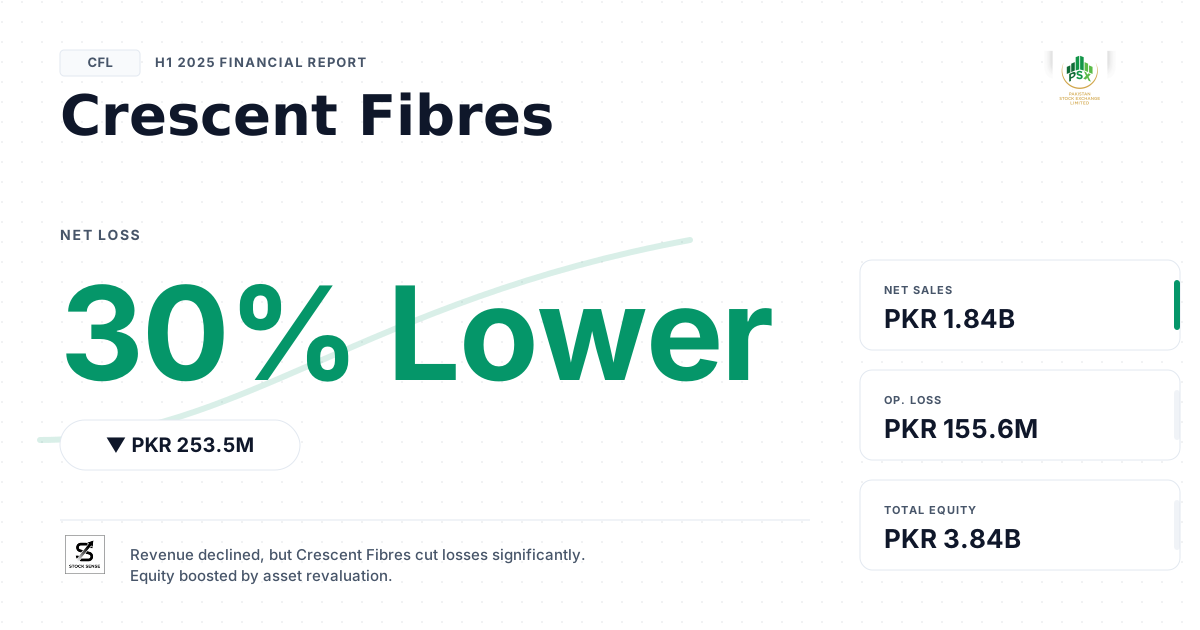
Crescent Fibres Limited (CFL) has reported its half-year results to December 31, 2025, presenting a mixed picture for investors. Despite a significant 37% decline in net sales, the company demonstrated notable resilience by substantially reducing its operational losses compared to the same period last year. Furthermore, a strategic revaluation of property, plant, and equipment significantly bolstered total comprehensive income and equity, offering a crucial boost to its financial position.
Financial Performance Overview
For the half-year ended December 31, 2025, CFL's net sales stood at PKR 1.84 billion, marking a 37% decrease from PKR 2.92 billion recorded in the corresponding period of 2024. This downward trend was also evident in the quarter-on-quarter performance, with sales falling by approximately 39% to PKR 831 million from PKR 1.37 billion, reflecting persistent market challenges.
Despite the significant revenue contraction, CFL demonstrated commendable cost management. The gross loss narrowed considerably to PKR 75.5 million for the half-year (from PKR 138.2 million in H1 2024) and to PKR 67.5 million for the quarter (from PKR 158.1 million in Q2 2024). This improved efficiency translated into a 34% reduction in operating loss for the half-year, bringing it down to PKR 155.6 million (from PKR 235.4 million). Quarterly operating loss saw an even more substantial 61% reduction, settling at PKR 78.0 million (from PKR 198.3 million). Consequently, the net loss for the half-year improved by nearly 30% to PKR 253.5 million (from PKR 361.5 million), leading to a lower loss per share of PKR 20.41, an improvement from PKR 29.11 previously.
The balance sheet as of December 31, 2025, reflects an increase in total assets to PKR 6.58 billion from PKR 6.00 billion at June 30, 2025. This growth was primarily driven by a significant revaluation surplus on property, plant, and equipment, which added approximately PKR 838.5 million to the asset base. Total equity also saw a substantial rise, climbing to PKR 3.84 billion from PKR 3.22 billion, largely attributable to this revaluation. While long-term financing decreased, short-term borrowings increased, indicating a potential reliance on working capital amidst the challenging environment. Current liabilities experienced a marginal decrease from PKR 2.205 billion to PKR 2.204 billion.
Cash flow from operating activities turned negative, recording a net outflow of PKR 15.6 million for the half-year, a significant deterioration from the PKR 131.0 million inflow in the prior year. Investing activities generated a net inflow of PKR 17.0 million, primarily from the sale of investments and operating fixed assets. Financing activities resulted in a net outflow of PKR 20.8 million, influenced by reduced long-term financing and increased short-term borrowings, reflecting the company's capital structure adjustments.
Strategic Insights and Outlook
The financial statements do not provide a breakdown by specific business lines or segments, making it challenging to pinpoint exact revenue drivers. However, the improved loss position clearly stems from enhanced cost management and operational efficiencies, effectively mitigating the impact of reduced sales volume. The significant increase in total comprehensive income and the balance sheet's asset base was predominantly due to the revaluation of the company's property, plant, and equipment, which added PKR 838.5 million to capital reserves, strengthening the company's book value.
Management's Stance and Investor Implications
The board did not recommend any dividend, bonus shares, or right shares for the period, signaling a focus on preserving capital amidst current challenges. The substantial revaluation of fixed assets appears to be a strategic move to reflect current market values, potentially enhancing the company's perceived financial strength and borrowing capacity. While long-term debt decreased, the uptick in short-term borrowings might indicate a reliance on working capital financing to manage day-to-day operations in a tough revenue environment. The negative operating cash flow, a critical indicator of core business health, warrants close monitoring by investors.
Investor Takeaway: A Balancing Act
For investors, these results present a nuanced picture. The positive takeaway is CFL's commendable ability to significantly reduce its operational losses despite a sharp decline in sales, underscoring improved efficiency and cost control. The asset revaluation also provides a substantial boost to the company's book value and equity, offering a stronger foundation. However, the persistent and substantial decline in revenue remains a significant concern, signaling potential challenges in market demand or competitive pressures that need to be addressed. The negative operating cash flow further highlights the immediate liquidity challenges.
Rational investors should closely watch for concrete signs of revenue stabilization or growth in upcoming quarters. Sustained cost management will be paramount to maintaining the current trajectory of reduced losses. Given the absence of dividends and ongoing operational challenges, CFL appears to be in a phase of strategic consolidation and efficiency improvement. Future disclosures on market conditions, strategic initiatives to boost sales, and a return to positive operating cash flow will be key catalysts for a more optimistic outlook.