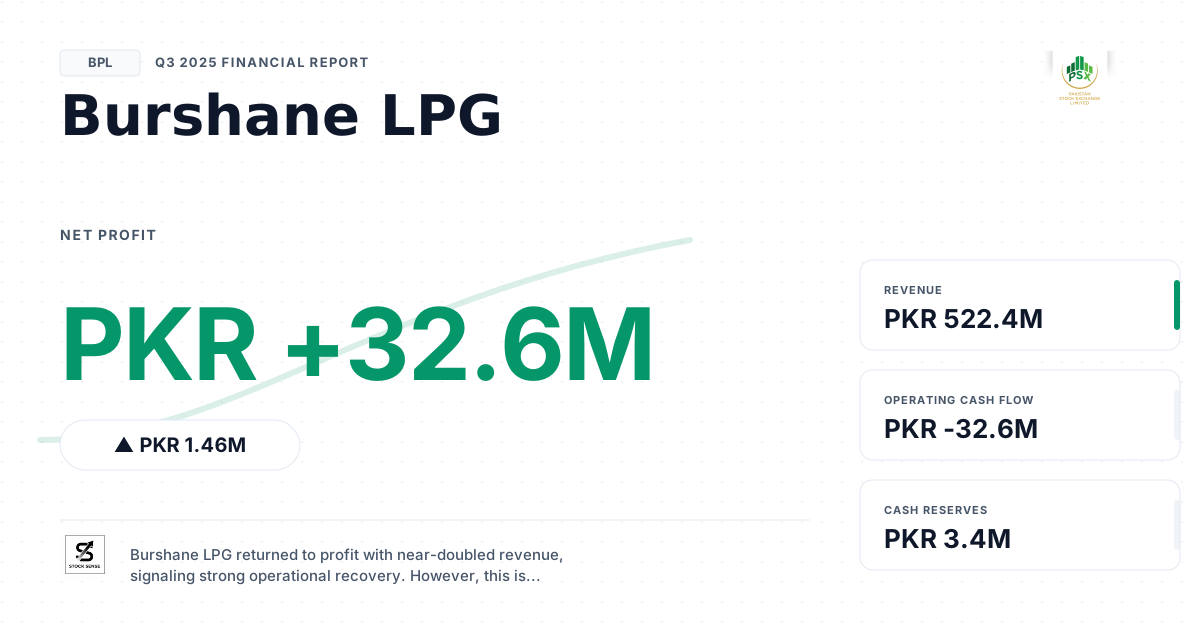
Burshane LPG (Pakistan) Limited (BPL) has released its unconsolidated financial results for the quarter ended September 30, 2025, painting a picture of dramatic operational recovery alongside significant liquidity challenges. The company successfully transitioned from a substantial net loss to a modest net profit, fueled by impressive top-line expansion. However, this positive earnings shift is overshadowed by a sharp deterioration in operating cash flow and a precipitous decline in cash reserves, presenting a complex scenario for investors.
Income Statement Highlights: A Return to Black
BPL's revenue generation was a standout feature, with sales nearly doubling by 97.2% to PKR 522.4 million in Q3 2025, up from PKR 263.8 million in the corresponding period of 2024. This robust growth directly translated to the gross profit, which also surged by 96.0% from PKR 15.8 million to PKR 31.0 million. Demonstrating improved operational leverage, the company successfully swung from an operating loss of PKR 14.6 million last year to an operating profit of PKR 10.5 million this quarter.
Ultimately, BPL reported a net profit of PKR 1.46 million for the quarter, a significant turnaround from the net loss of PKR 31.14 million recorded in the prior year. This positive earnings performance resulted in an Earnings Per Share (EPS) of PKR 0.06, a welcome change from the loss per share of PKR 1.38 previously. Despite the return to profitability, the Board did not recommend any cash dividend, bonus shares, or right shares for the period, signaling a conservative approach to capital allocation.
The Alarming Cash Flow Picture
On the cash flow front, the picture is considerably less encouraging. Operating activities consumed a substantial PKR 32.6 million in cash during the quarter, a stark contrast to the PKR 1.0 million generated in the prior year. This negative operating cash flow, a critical indicator of a company's ability to fund its operations, raises immediate concerns about BPL's liquidity management.
Further exacerbating the liquidity crunch, trade receivables soared by 105.2%, jumping from PKR 40.5 million at June 30, 2025, to PKR 83.1 million at September 30, 2025. This significant increase suggests potential challenges in collecting payments or extended credit terms, directly impacting the company's working capital. Consequently, cash and bank balances plummeted by a dramatic 90.4%, falling from PKR 35.8 million to just PKR 3.4 million over the quarter. This rapid depletion of cash reserves points to considerable working capital pressures as the company scales up its sales.
Key Drivers and Operational Insights
While the financial statements do not provide a detailed breakdown by business segment, the substantial increase in sales suggests robust demand for LPG or successful market penetration strategies. A notable contributor to the bottom line was 'Other Income', which significantly increased by 87.0% to PKR 22.9 million from PKR 12.2 million in the previous year, helping to partially offset administrative and distribution expenses.
The company's capital expenditure for the quarter remained modest at PKR 0.5 million. In terms of financing, BPL repaid PKR 8.0 million in long-term loans but also secured PKR 9.3 million in short-term loans, indicating ongoing debt management. Short-term borrowings remained substantial at PKR 154.0 million, unchanged from the previous quarter, highlighting a continued reliance on short-term debt.
Investor Outlook: Navigating the Mixed Signals
For investors, BPL's latest unconsolidated results present a compelling, yet complex, narrative. The robust revenue growth and return to profitability, marked by a positive EPS, signal a strong operational recovery in the company's core business. This turnaround is a testament to improved sales performance and potentially better cost management or pricing power.
However, the significant negative operating cash flow, the sharp increase in trade receivables, and the alarming decline in cash balances are critical areas of concern that cannot be overlooked. These factors collectively point to severe working capital strain and potential liquidity challenges that could impede future growth or operational stability. Rational investors should closely monitor BPL's ability to convert its impressive sales growth into sustainable positive cash flow from operations. Improvement in working capital management will be paramount for the company's long-term financial health. The absence of a dividend, despite the profit, reinforces the notion that BPL is prioritizing cash conservation. The upcoming detailed quarterly report, to be transmitted through PUCARS, will be crucial for further insights into management's strategy to address these pressing cash flow challenges.