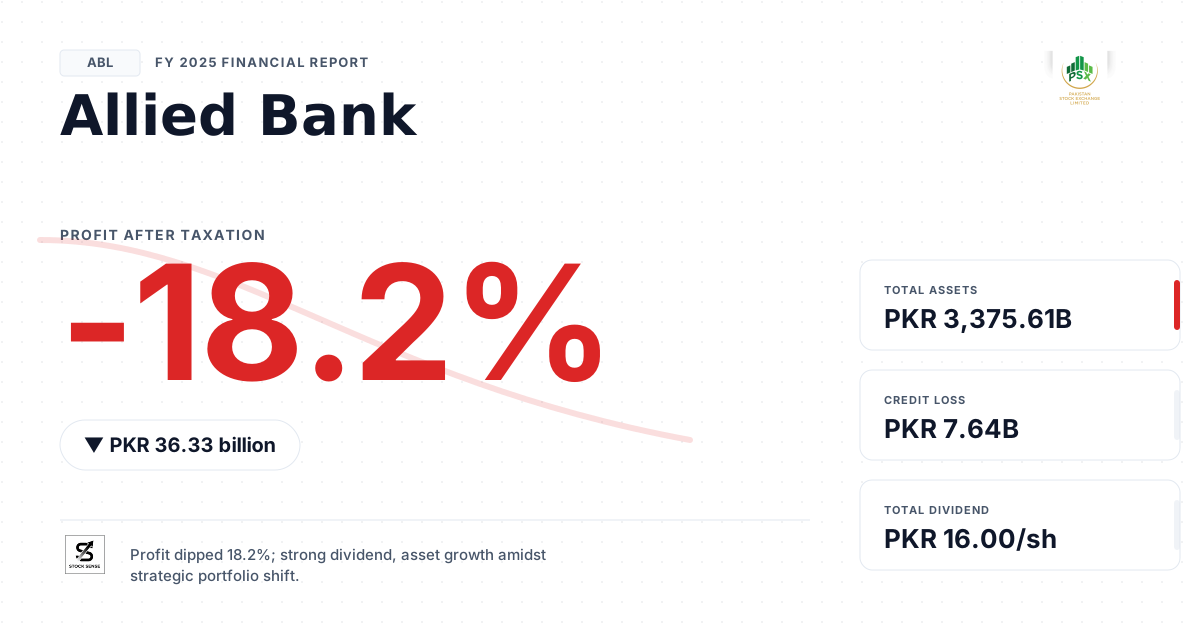
Allied Bank Limited (ABL) has announced its financial results for the year ended December 31, 2025, presenting a mixed picture for investors. While the bank maintained a robust dividend payout, shareholders will note a significant decline in annual profitability, primarily driven by increased operating costs and a substantial rise in credit loss provisions. The results also highlight a notable strategic shift in the bank's asset allocation.
Financial Performance Overview
ABL reported a Profit After Taxation (PAT) of PKR 36.33 billion for 2025, an 18.2% decrease from PKR 44.39 billion in 2024. Consequently, Basic and Diluted Earnings Per Share (EPS) fell from PKR 38.77 to PKR 31.73. This decline occurred despite a modest increase in non-markup income, which rose by 2.4% to PKR 31.07 billion, largely supported by fee and commission income. However, net mark-up income, a core revenue stream, saw an 8.9% reduction to PKR 105.10 billion.
The primary drag on profitability came from two key areas: operating expenses and credit loss allowance. Operating expenses surged by 15.7% to PKR 66.82 billion, reflecting inflationary pressures and potentially increased operational costs. More strikingly, the credit loss allowance skyrocketed by an alarming 182%, from PKR 2.71 billion in 2024 to PKR 7.64 billion in 2025, indicating a more cautious stance on asset quality or an increase in non-performing assets.
On the balance sheet front, total assets grew impressively by 19.6% to PKR 3,375.61 billion. Customer deposits also showed healthy growth, increasing by 16.2% to PKR 2,344.86 billion, underscoring the bank's strong funding base. Cash flow from operating activities saw a dramatic positive swing, moving from a negative PKR 0.78 billion in 2024 to a robust positive PKR 1,036.19 billion in 2025, indicating significantly improved operational liquidity.
Key Drivers & Strategic Shifts
A significant trend observed in ABL's 2025 results is a strategic re-orientation of its asset portfolio. While deposits grew substantially, advances (loans) decreased by nearly 25% to PKR 789.95 billion. This reduction in lending was offset by a massive 89% increase in investments, which now stand at PKR 2,140.32 billion. This shift suggests a move towards potentially lower-risk, higher-yielding investment avenues, possibly in government securities, amidst a challenging lending environment or to optimize capital allocation.
Other notable drivers include:
- Fee and Commission Income: Showed positive growth, contributing to non-markup income.
- Foreign Exchange Income: Experienced a decline, likely due to market volatility or reduced trading opportunities.
- Credit Quality: The significant increase in credit loss allowance points to either a proactive provisioning strategy or a deterioration in the quality of the loan book, which warrants close monitoring.
Management Actions & Shareholder Returns
The Board of Directors recommended a final Cash Dividend of PKR 4.00 per share (40%), bringing the total dividend for the year to PKR 16.00 per share (160%), including the interim dividends of PKR 12.00 per share already paid. This consistent dividend payout signals management's confidence in the bank's long-term stability and commitment to shareholder returns, despite the dip in annual profit.
The substantial increase in investments coupled with a reduction in advances indicates a deliberate strategic decision. This could be a response to higher interest rates making government securities more attractive, a de-risking strategy in a challenging economic climate, or a move to improve liquidity. No bonus or right shares were announced for the year.
Investor Takeaway
For investors, ABL's 2025 results present a nuanced picture. The generous dividend payout, strong deposit growth, and improved operating cash flow offer comfort, highlighting the bank's fundamental strength and commitment to shareholders. However, the notable decline in profit after tax, driven by escalating operating expenses and a sharp increase in credit loss provisions, cannot be overlooked.
The significant shift from advances to investments is a key strategic move to watch. Investors should monitor whether this re-allocation improves overall profitability and asset quality in the coming periods. Future catalysts will include the bank's ability to manage credit risk effectively, control operating costs, and generate higher returns from its re-aligned asset portfolio. The sustainability of the dividend in the face of declining profits will also be a crucial factor for ABL's valuation going forward.